June 22, 2026
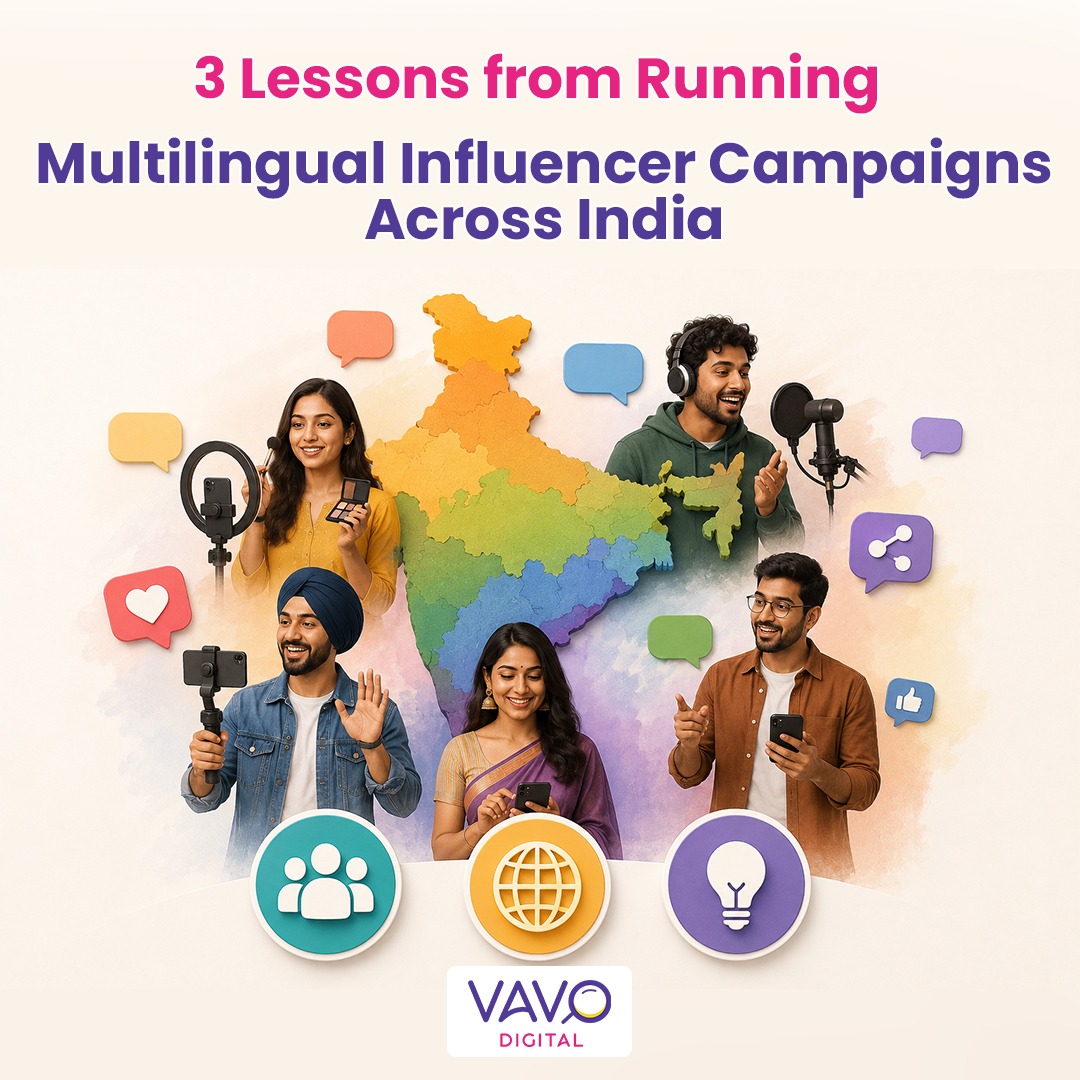
3 Lessons from Running Multilingual Influencer Campaigns Across India
More than 73% of internet users in India now consume content in regional languages. Yet many influencer campaigns are still planned as though English is the default and regional languages are simply an adaptation.
We've seen this play out repeatedly in multilingual creator campaigns. The brief gets translated, the messaging stays the same, and the content checks all the boxes. But the audience response often falls short of expectations.
The reason is simple: audiences don't engage with content because it's in their language. They engage with content that feels native to their language and culture.
At Vavo Digital, we've run influencer campaigns in 10+ languages across India for brands including Meesho, Nykaa, Haldiram, Malabar, MakeMyTrip etc.
Across those campaigns, three lessons have consistently stood out. So, let’s get into them straight away:
Regional creators in India achieve 40% higher engagement rates than metro counterparts on average. That gap isn't just because of audience size; it's because of how much more trust a creator carries when they're speaking the way their audience actually speaks.
The platform question matters here, too. For Tier 2 and Tier 3 audiences, ShareChat, Moj, and Josh have creator pools that Instagram simply doesn't. If a multilingual campaign brief only covers Instagram and YouTube, it's already leaving meaningful reach behind, especially in states where regional-language platforms have outpaced English-first ones.
For context on how the algorithms on these platforms are rewarding content in 2026, this breakdown of what Instagram, YouTube, and LinkedIn actually reward right now is worth reading before you finalise platform selection.
Lesson 1: The problem usually starts with the brief
This is the most common mistake in a multilingual campaign. The English brief gets translated into the regional language, the creator follows it closely, and the content lands flat. Here's the reason: audiences in regional markets are sharp about authenticity. A creator speaking "translated Tamil" structured like an English sentence, just in Tamil words, doesn't sound like a recommendation from someone they follow. It sounds like a corporate voiceover with a regional accent slapped on. The brief has to start with the creator's voice, not your messaging document. Here’s what the brief looks like at each level:| Brief Approach | What It Produces |
| Translate the English brief and send it to the creator | Stiff, ad-like content. Audiences scroll past. |
| Share key messages, let the creator script in their language | Natural delivery, genuine feel, higher engagement |
| Brief around a local festival, occasion, or cultural moment | Content that earns shares, not just views |
Lesson 2: Creator sourcing timelines vary more than most brands expect
Here's something that rarely comes up in multilingual campaign planning until it's too late: the creator ecosystem across India is not evenly distributed, and the imbalance is significant. Around 70% of India's influencer campaigns still come from just 9 states. The remaining 21 states contribute less than 30% combined. In states like Maharashtra, Karnataka, and Tamil Nadu, you can find creators across food, fashion, finance, and lifestyle with relative ease. In Odisha, the North-East, or parts of upper north India, the options are genuinely limited both in number and category depth. For brands expanding into new regional markets, this talent gap can quietly derail timelines before a single post goes live. In campaigns we've run for brands like Meesho and MakeMyTrip, which needed genuine pan-India reach, this meant building separate sourcing timelines by state, not just by language. A campaign that takes two weeks to cast in Mumbai can take five to six weeks if you need niche creators in a developing state ecosystem. A realistic picture of creator availability by region:| Region | Creator Pool Depth | Key Languages |
| Maharashtra, Karnataka, Tamil Nadu | Deep: strong variety across categories | Marathi, Kannada, Tamil |
| West Bengal, Andhra/Telangana, Kerala | Strong: growing fast | Bengali, Telugu, Malayalam |
| Rajasthan, Punjab, Uttar Pradesh | Moderate: Hindi-first creators dominate | Hindi (regional dialects) |
| Odisha, North-East states | Still developing: limited category variety | Odia, Assamese, regional dialects |
Lesson 3: The usual KPI framework doesn't tell the whole story
Most brands apply the same KPI benchmarks to a Hindi campaign in Lucknow as they do to an English campaign in Mumbai. Same engagement rate targets, same view thresholds, same CPM expectations. That's a structural mistake, not because regional campaigns perform worse, but because the performance signals look different and need to be read differently. Vernacular content consistently drives 2 to 3x higher engagement than English content for comparable audience sizes. But the comments come in regional languages, the shares happen inside WhatsApp groups and closed communities, and a significant portion of conversion happens offline, through store visits, distributor reorders, or word-of-mouth that never touches a UTM link. In campaigns for F&B and FMCG brands like Haldiram, where distribution runs deep into Tier 2 and 3 markets, aligning campaign windows with distributor sell-through data gave us a far more accurate read on what was actually working than digital attribution alone. Three things to set up before a regional campaign goes live:- Language-specific comment tracking
- Separate benchmarks by language-market
- Offline signal tracking where relevant