
July 29, 2026
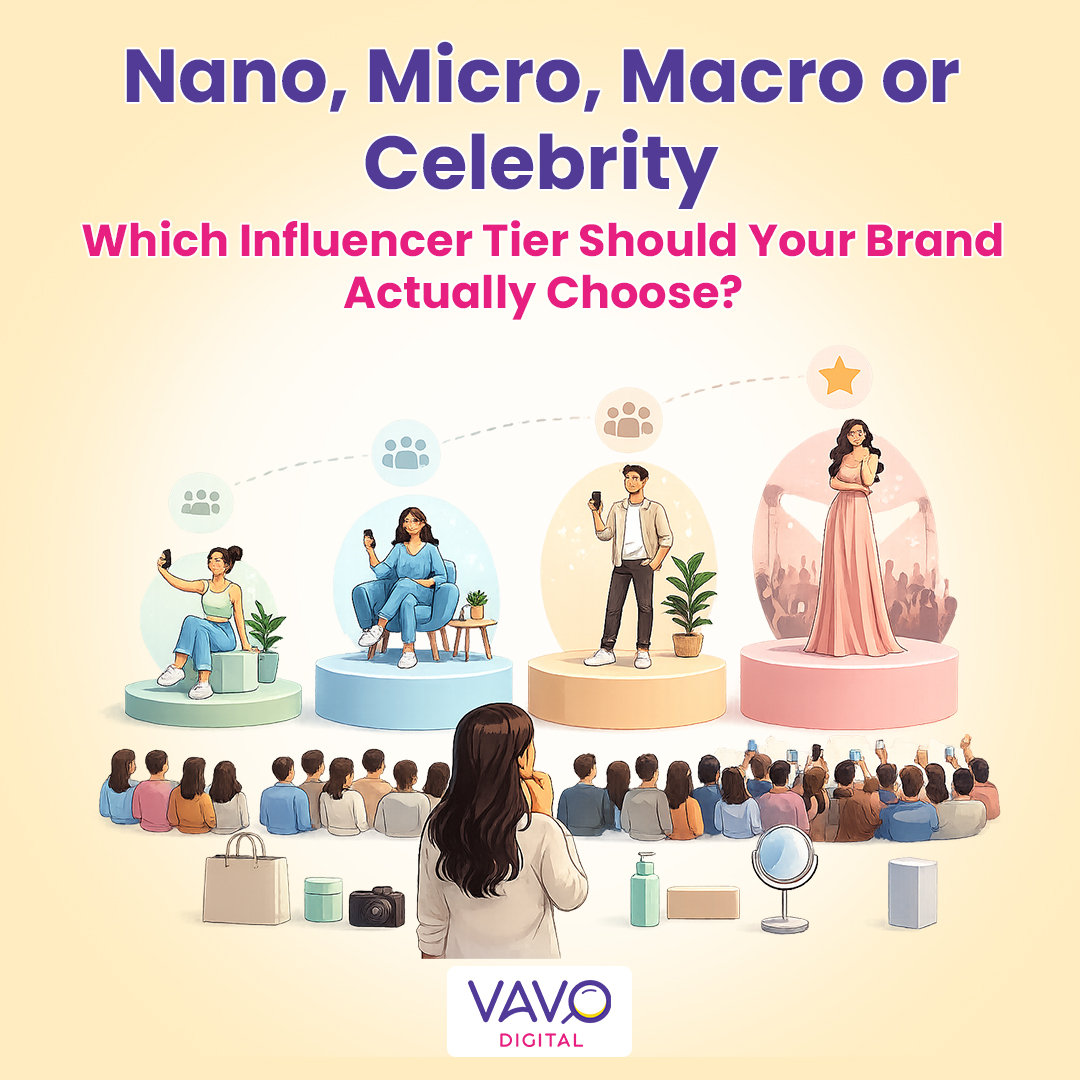
Nano, Micro, Macro, or Celebrity: Which Influencer Tier Should Your Brand Actually Choose?
Every brand asks this question. Most get the answer wrong.
Not because the information isn't available. Because the question itself is usually framed the wrong way. "Which influencer tier is best?" isn't the right question. "Which influencer tier is best for what I'm trying to do?" is.
The answer depends on your campaign goal, your category, your budget, and what you're actually trying to measure. Here's the data-backed breakdown every brand marketer needs before the next brief goes out.
The strongest campaigns in India right now don't pick one tier. They build a blended strategy: a macro or celebrity creator for reach and recall, and a portfolio of micro and nano creators for engagement, conversion, and content volume. 78% of successful influencer campaigns involve micro creators as a core component.
The tier breakdown: What each one actually delivers
Before getting into strategy, here's what the numbers say about each tier in India in 2026.| Tier | Followers | Avg Engagement Rate | Cost per Reel (India) | Best for |
| Nano | 1K to 10K | 6 to 12% | ₹2,000 to ₹12,000 | Hyperlocal, seeding, regional outreach |
| Micro | 10K to 100K | 3 to 7% | ₹8,000 to ₹80,000 | Conversion, D2C, category-specific campaigns |
| Mid-tier | 100K to 500K | 2 to 4% | ₹50,000 to ₹3,50,000 | Scale with authenticity, consideration campaigns |
| Macro | 500K to 2M | 1 to 2.5% | ₹2,00,000 to ₹12,00,000 | Mass awareness, brand launches |
| Celebrity | 2M+ | 0.8 to 1.5% | ₹8,00,000 to ₹1Cr+ | Tentpole moments, brand prestige |
Nano creators: the most trusted voice in the room
Nano creators have the highest engagement rates of any tier, often crossing 8 to 12% on Instagram. Their audiences are small, tight-knit, and frequently people who actually know the creator in real life. That level of personal trust translates directly into action. For brands, this means nano creators are exceptionally good at one specific job: driving conversion within a hyper-local or niche community. A nano creator in Chennai talking about a regional skincare brand, or a fitness nano in Pune recommending a nutrition supplement, reaches an audience that trusts them as they would a friend's recommendation. The catch is scale. Managing 50 nano creators to match the reach of one macro creator takes real operational infrastructure. The content output is high, and the individual reach is low. Nano works best as part of a seeding strategy, a regional outreach play, or a UGC generation campaign rather than as a standalone awareness channel.Micro creators: where most of the ROI actually lives
Micro-influencers with 10K to 100K followers deliver 3.2 times higher engagement than mega-influencers at 60% lower cost per post. Their average ROI is ₹7.14 for every ₹1 spent, compared to ₹2.87 for celebrity influencers. For most D2C brands, the micro tier is where the brief should start. They're affordable enough to run multiple partnerships simultaneously, professional enough to produce quality content, and trusted enough by their audiences to drive genuine purchase intent. Category matters a lot at this tier, though. A finance or tech micro at 50K followers commands significantly more than a lifestyle creator at the same size, and converts better too. Always check niche before checking follower count. At Vavo Digital, the micro and mid-tier combination is where we see the strongest campaign performance for brands trying to balance reach and conversion. Running a portfolio of 5 to 10 micro creators almost always outperforms a single macro deal at the same total budget.Mid-tier and macro creators: scale with accountability
Mid-tier creators (100K to 500K) sit in a sweet spot most brands overlook. They have enough reach to move brand metrics at scale and enough engagement to drive consideration. They're also increasingly professional, with dedicated creative teams and a strong understanding of what branded content needs to do. Macro creators (500K to 2M) are where brands go for genuine mass reach. Their engagement rates are lower, but 84% of major product launches in India still involve macro or mega creators because brand recall at scale is something smaller tiers simply can't deliver. One thing worth noting at these tiers: usage rights, exclusivity periods, and whitelisting (running creator content as paid ads) push pricing up 40 to 80%. Build this into budget conversations before the brief goes out. Also Read: How Brands Are Using Influencer Marketing at Events to Turn FOMO Into SalesCelebrities: reach without the relationship
Celebrity influencer campaigns deliver 4.1 times greater reach and 67% higher brand recall than micro creators. For a brand launch, a tentpole moment, or a campaign where mass awareness is the only KPI, celebrity makes sense. For most other campaign objectives, the numbers don't support the cost. Mega-influencer engagement rates have dropped 30% since 2022. Celebrity ROI averages ₹2.87 per rupee spent versus ₹7.14 for micro. The audience reach is enormous, but the audience trust is thin. Use celebrity for when the brief demands reach and prestige. Don't use it when the brief demands conversion.Which tier for which goal?
| Campaign goal | Recommended tier |
| Brand awareness, mass reach | Macro or celebrity |
| Consideration and trust building | Mid-tier |
| Conversion and ROI | Micro |
| Hyperlocal or regional outreach | Nano |
| UGC and seeding | Nano and micro |
| Tentpole launches | Celebrity plus micro for amplification |
The category factor most brands miss
Engagement rates and costs vary significantly by niche at the same follower count. Finance and tech creators command 30 to 50% higher rates than lifestyle creators at equivalent tier levels, and they convert better because their audiences are actively seeking product recommendations. Before finalising any tier decision, match the creator's category to your product's purchase trigger. A nano finance creator will outperform a macro lifestyle creator for a fintech brand every single time, regardless of what the follower numbers say.The bottom line
There's no universally correct answer to which influencer tier your brand should use. There's only the right answer for what you're trying to achieve, in the category you're operating in, with the budget you actually have. Start with the campaign goal. Work backward to the tier. And brief for the outcome you need, not the vanity metric that looks good in a deck. If you want help building a creator mix that's actually built around your campaign goals, let's talk.FAQs
- Which influencer tier gives the best ROI in India? Micro creators consistently deliver the highest ROI at ₹7.14 per rupee spent, with 3.2x higher engagement than mega-influencers at 60% lower cost. For most conversion-focused campaigns, micro is the tier to start with.
- When should brands use celebrity influencers? For brand launches, tentpole moments, and campaigns where mass reach and brand recall are the primary objectives. Not for conversion-focused campaigns where engagement and audience trust matter more than reach.
- What's the difference between nano and micro influencers in India? Nano creators have 1K to 10K followers with 6 to 12% engagement rates and work best for hyperlocal and community-driven campaigns. Micro creators have 10K to 100K followers with 3 to 7% engagement rates and work better for conversion at scale.
- How much does influencer marketing cost in India in 2026? A nano creator Reel costs ₹2,000 to ₹12,000. Micro runs ₹8,000 to ₹80,000. Mid-tier is ₹50,000 to ₹3,50,000. Macro starts at ₹2,00,000. Celebrity campaigns start at ₹8,00,000 and can cross ₹1 crore. Finance and tech niches command 30 to 50% higher rates than lifestyle at the same tier.
- Should brands use one tier or multiple tiers in a campaign? Multiple tiers almost always outperform a single tier. Use macro or celebrity for reach, micro for conversion, and nano for seeding and regional outreach. 78% of successful influencer campaigns involve micro creators as a core component even when other tiers are present.
- How do I choose between micro and mid-tier creators? If conversion is the primary goal, go micro. If you need reach alongside engagement, mid-tier gives you both. Budget is also a factor; mid-tier costs 3 to 5 times more per creator. For most D2C brands with moderate budgets, a portfolio of micro creators outperforms a single mid-tier deal.