August 22, 2026
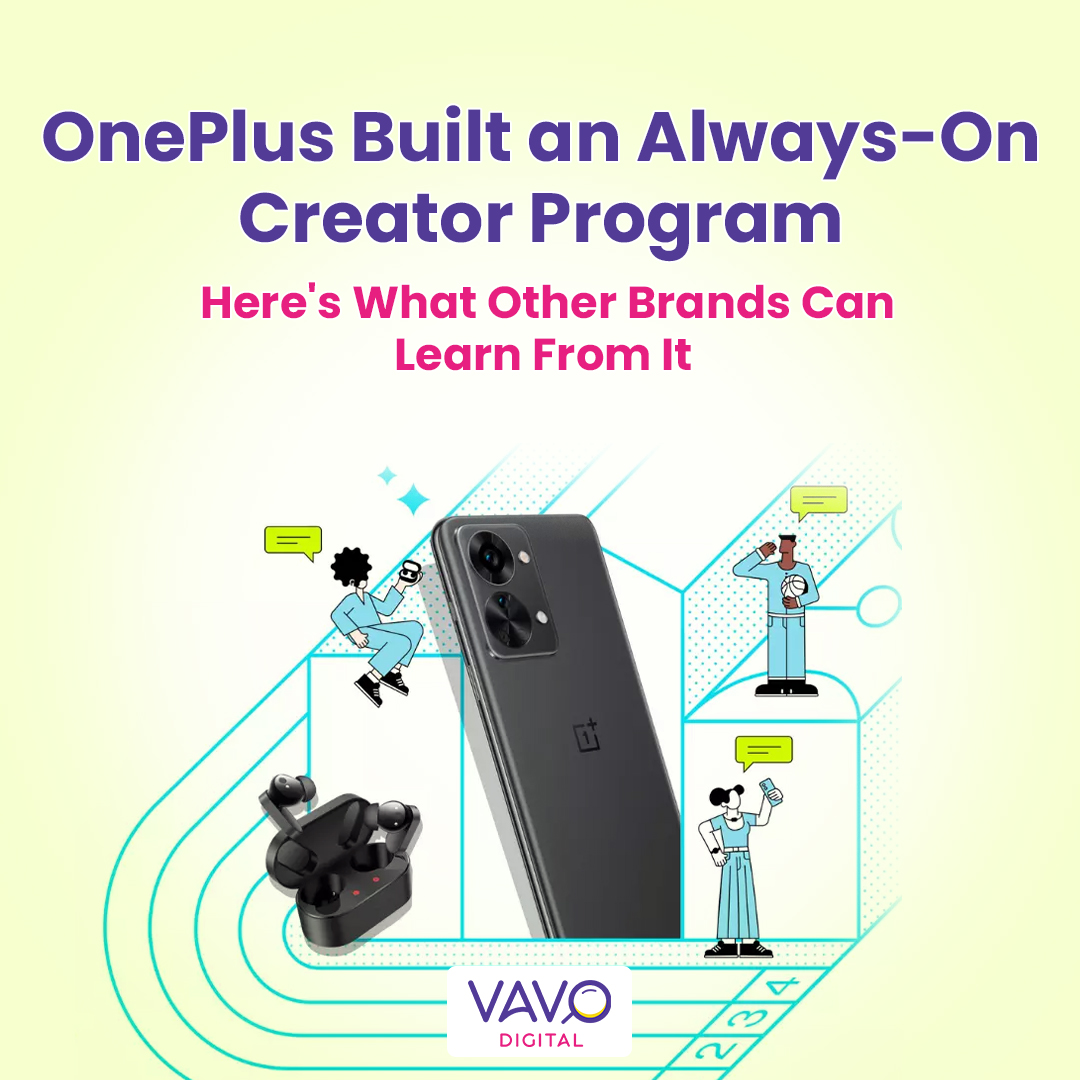
OnePlus Built an Always-On Creator Program. Here’s What Other Brands Can Learn From It
Most brands run one big influencer campaign around a product launch and go quiet until the next one. OnePlus built something different. A creator program that runs all year, every year, whether or not there's a new phone to sell.
It's called the Student Ambassador Program, and it's one of the clearest examples in India of what an always-on creator strategy actually looks like when it's built properly.
Here's how it works, why it's effective, and what consumer tech and D2C brands can genuinely take from it.
What is the OnePlus Student Ambassador Program?
The OnePlus Student Ambassador Program recruits students aged 18 to 24 from colleges across India, with no restrictions on city or institution, and trains them to become what OnePlus calls community specialists and brand evangelists on their own campuses.
This isn't a one-time content deal. Each ambassador commits to a 6- to 9-month cycle, aligned with the academic calendar, working roughly 3 to 4 hours a week. They're assigned to one of two tracks, Gaming or Lifestyle, and each one runs their own campus individually, though collaboration between ambassadors is encouraged.
What they actually do: create content based on regular briefs, host gaming tournaments and masterclasses, drive campus engagement through events, and represent the brand authentically across Instagram, YouTube, LinkedIn, X, and the OnePlus Community Forum.
The one non-negotiable eligibility requirement is telling. Ambassadors must own and actively use a OnePlus phone. OnePlus isn't paying people to pretend to be fans. It's recruiting people who already are.
Why this model works better than campaign-based influencer marketing
It runs on relationships, not transactions A creator briefed once for a single sponsored post has no real stake in the brand. A student ambassador who has spent eight months building a gaming community on their campus, hosting OnePlus events, and representing the brand to their peers has something a one-off creator never develops. Genuine investment in the outcome. OnePlus is explicit about this in their own program messaging. They value engagement over follower count and creativity over raw reach. That's the always-on mindset in one sentence. The metric that matters isn't how many people saw a single post. It's how deeply embedded the brand becomes in a specific community over time. It produces content no brief could manufacture Ambassadors receive weekly or monthly briefs covering themes and formats, but the content itself is built around their personal style. Content should be authentic, campus-relevant, creator-first, and not ad-like. That's the standard OnePlus holds the program to. The result is a stream of content that feels native to campus culture because it is campus culture. A gaming tournament hosted by an actual gaming club member reads completely differently than a sponsored gaming stream from a paid creator with no real connection to the audience. It builds infrastructure, not just content Each ambassador gets a dedicated Program Manager as their point of contact for briefs, feedback, and event approvals. That's meaningful. Most one-off influencer campaigns run through a single overworked coordinator juggling thirty creators over two weeks. OnePlus built a management structure that can actually support a creator relationship over six to nine months without the quality dropping. It compounds instead of resetting This is the core economic argument for always-on creator programs generally. Long-term creator partnerships generate meaningfully higher engagement than one-off campaigns because an audience hearing about a brand from a trusted source repeatedly across months builds a different kind of trust than hearing it once. If you want to understand this shift in more depth, we've written about why Indian brands are moving from one-off posts to always-on creator programs. Every cycle of the OnePlus program doesn't start from zero. It builds on relationships, community presence, and content history that a one-off campaign simply never accumulates.What consumer tech and D2C brands can actually replicate
You don't need OnePlus's budget to build a version of this. The principles scale down. Pick a track, not a follower threshold OnePlus doesn't select ambassadors by follower count. They select for genuine community involvement, gaming club members, tech society leaders, cultural committee organisers. Brands trying to replicate this should look for creators embedded in a specific community, not creators with the biggest number attached to their name. If your brand is still deciding which tier of creator to invest in, this breakdown of nano, micro, macro, and celebrity tiers is a useful starting point. Build the cycle around a natural rhythm The six-to-nine-month academic-aligned cycle isn't arbitrary. It matches how student communities naturally operate. Whatever your brand's version of this is- a fitness brand aligning to training seasons, a fashion brand aligning to festive cycles- build the program length around a rhythm your creators' audiences already live by. Give creators a real structure, not just a brief The weekly brief plus dedicated Program Manager model is what makes this sustainable at scale. Brands trying to run always-on programs without this infrastructure tend to see quality drop as the relationship matures, because nobody is actively managing it past the first month. Let the format stay native OnePlus explicitly tells ambassadors their personal style is their strength. Brands replicating this model need to resist the instinct to tighten creative control as the relationship matures. The opposite is usually the better move. The more a creator understands the brand, the more freedom they should be given.What this means for your next creator strategy
OnePlus didn't build the Student Ambassador Program to sell more phones in the short term. They built it to have a standing creator infrastructure that produces content, drives campus-level engagement, and builds brand affinity continuously. The kind of asset a one-off campaign can never become. For consumer tech and D2C brands watching their influencer ROI plateau despite bigger budgets, the lesson isn't "run more campaigns." It's "stop running campaigns and start building a program." If you want help building an always-on creator program for your brand, let's talk.FAQs
- What is the OnePlus Student Ambassador Program? It's a campus-based, always-on creator program where students aged 18 to 24 represent OnePlus on their college campuses for six to nine months, creating content, hosting events, and building community engagement in exchange for training, brand access, and career development opportunities.
- How is an always-on creator program different from a regular influencer campaign? A regular campaign briefs creators for a fixed period around a specific launch or moment, then ends. An always-on program maintains ongoing creator relationships that run continuously, building deeper trust and producing content that compounds in value over time rather than resetting with each new campaign.
- Can smaller D2C brands build an always-on creator program like OnePlus? Yes. The core principles scale down. Recruit creators embedded in a genuine community rather than selecting purely on follower count, build a program cycle around a natural rhythm relevant to your category, and provide consistent structure and support rather than a one-time brief.
- Why does OnePlus require ambassadors to own a OnePlus phone? It ensures ambassadors are genuine users representing authentic experience, not paid promoters with no real relationship to the product. This authenticity is central to why the content produced by the program feels credible to its campus audience.
- What content platforms does the OnePlus program use? Ambassadors create content across Instagram, YouTube, LinkedIn, X, and the OnePlus Community Forum, along with running offline campus activations like gaming tournaments and masterclasses.