October 30, 2026
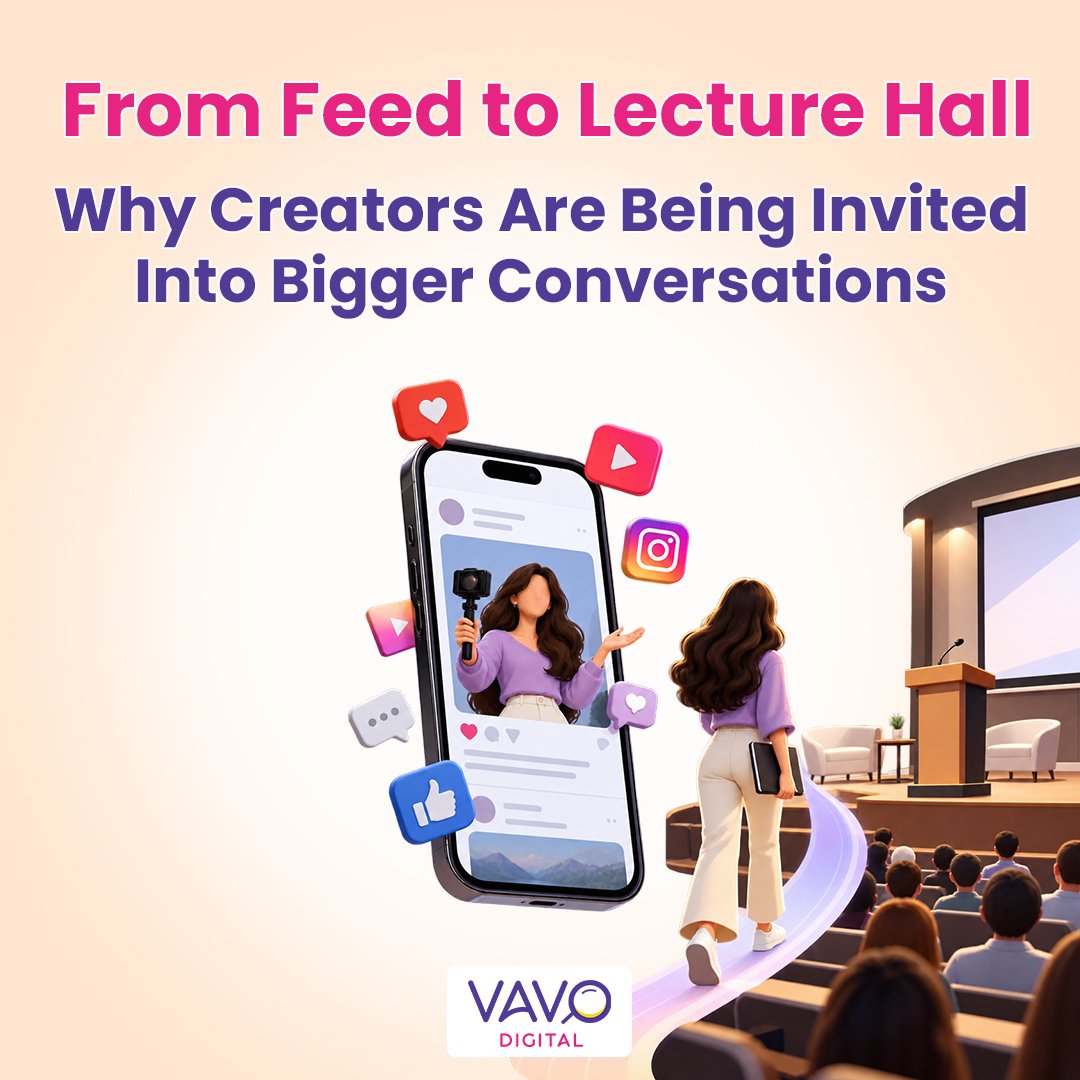
From Feed to Lecture Hall: Why Creators Are Being Invited Into Bigger Conversations
Not long ago, a creator on a stage meant a brand event or a festival panel. Today, creators are being invited to Harvard and other renowned academic institutions.
Earlier this year, Sakshi Sindwani and Nikhil Taneja spoke at Harvard Business School. Sakshi also took part in a conversation at the India Conference at Harvard. More recently, fashion and lifestyle creator Niki Mehra spoke at the University of Cambridge’s Global Leaders Forum in September 2026, discussing how digital relevance has become a form of global relevance. Meanwhile, universities in the US are building degrees and research centres around the creator economy.
For brands, this is more than a nice headline. It shows how creators are now seen: as people with expertise, businesses, and audiences worth learning from. Here is what is happening, why it is happening, and what brands can do with it.
What is happening
- Harvard Business School: Sakshi Sindwani and Nikhil Taneja spoke on a panel. Sakshi’s session was titled Beyond Influence: The Evolution of Creator Economy, while Nikhil spoke about his journey, masculinity, and mental health.
- India Conference at Harvard: Sakshi, a Forbes 30 Under 30 honoree, spoke about inclusivity, confidence, and creator entrepreneurship in a conversation recorded at the conference.
- Universities building programs: Arizona State launched a BA in content creation, Stanford introduced a graduate course called Mastering the Creator Economy, and Syracuse opened a Center of Creator Economy, according to Digiday.
- University of Cambridge: More recently, fashion and lifestyle creator Niki Mehra spoke at the Global Leaders Forum in September 2026 about how digital relevance has become a form of global relevance.
| Where | Example | What it signals |
| University panels | Sakshi Sindwani and Nikhil Taneja at Harvard Business School | Business schools see creators as people to learn from |
| University conferences | Sakshi Sindwani at the India Conference at Harvard; Niki Mehra at the University of Cambridge | Creators get a stage on culture and entrepreneurship |
| Academic programs | Arizona State, Stanford and Syracuse | The creator economy is becoming a subject of study |
| Brand-owned formats | Series and microdramas | Creators are moving into bigger formats |
Why creators are being invited
- They run real businesses. A creator manages an audience, content, brand deals, and often a team. That makes them a useful case study for business students.
- They hold the attention of young audiences. Universities want students to hear from people they already follow.
- They speak from experience. Topics like inclusivity, mental health, and entrepreneurship land differently when someone shares their own journey.
- The industry is being taken seriously. When universities build courses around creators, brands and students start treating the work as a real career and a real channel.
What students are learning, and why brands should too
The new university courses are not only about going viral. According to Digiday, they cover how creator businesses are mapped and run, and students are asked to propose business moves for a real company. The same piece points out that the creator economy includes the people behind the camera too, such as influencer marketing teams and creator tool builders. Brands can take three things from this:- Creators are businesses with their own goals, not just media space.
- The work around a creator campaign, like planning, briefing, and measuring, is a skill in itself.
- The brands that understand creator businesses will work with them better.
What this means for brands
- Treat creators as experts, not ad slots: A creator invited to speak has a point of view. Brief for that expertise.
- Look at what a creator is invited to talk about, not only their follower count: A speaking invite shows credibility on a topic.
- Respect their creative voice: Every creator has their own tonality and way of connecting with their audience. Brand collaborations should build on that rather than impose rigid scripts or unnecessary creative restrictions.
- Think beyond posts: Panels, talks, workshops, podcasts, and events all give a creator room to explain their category properly.
- Match the creator to the conversation: A finance creator can explain a financial decision. A cultural storyteller can explain a tradition. The audience learns something, and the brand sits inside that.
- Celebrate the milestone, but do not hijack it: If a creator you work with gets a big invite, congratulate them. Do not turn their moment into your ad.
- Measure credibility, not only reach: Comments, saves, and questions show whether people trust what the creator says.
What this does not mean
Not every creator needs to be on a stage. A micro creator with real knowledge in a small niche can be just as credible to the right audience. Speaking invites are one signal of credibility, not the only one. The point is to look at expertise and trust, whatever the followers count.Ways brands can use this shift
- Host creator-led talks or masterclasses at colleges, which pairs well with campus programs.
- Invite creators to speak at brand events and industry panels, instead of only asking them to post from the venue.
- Build a content series around a creator’s expertise, like finance explainers or beauty tips.
- In our Malabar Gold and Diamonds Akshaya Tritiya campaign, finance creators and cultural storytellers each explained a different side of the same festival.
- Back creators who are building their own shows, podcasts, and microdramas.
What to do next
Creators speaking at Harvard is a sign of where the industry is heading. The people on the screen are being asked to explain, teach, and lead conversations, not only to sell. Brands that give creators room to do that will get better content and more trust. If you want help building a creator campaign around expertise and education, let’s talk.FAQs
- Why are creators being invited to speak at universities? They run real businesses, hold the attention of young audiences, and speak from experience on topics like entrepreneurship, inclusivity, and mental health.
- Which Indian creators have spoken at Harvard? Sakshi Sindwani spoke at the India Conference at Harvard and on a Harvard Business School panel, where Nikhil Taneja also spoke.
- Are universities teaching the creator economy? Yes. Arizona State has a BA in content creation, Stanford offers a graduate course, and Syracuse has a Center of Creator Economy.
- What does this mean for brands? Creators are increasingly seen as experts, so brands can brief them for knowledge and education, not only promotion.
- Does every creator need to speak at events to be credible? No. Credibility also comes from consistent, accurate, and useful content in a niche, at any follower size.