July 30, 2026
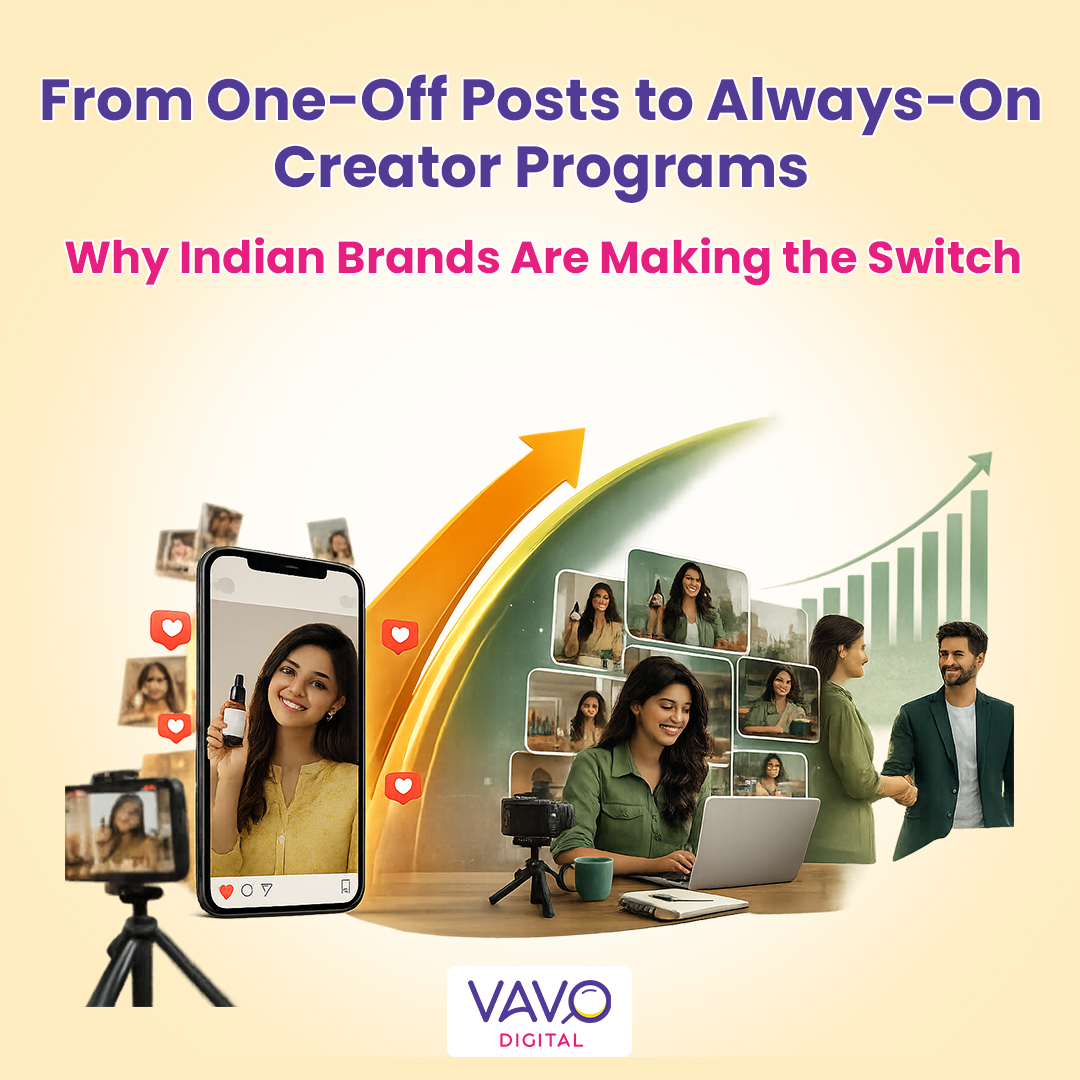
From One-Off Posts to Always-On Creator Programs: Why Indian Brands Are Making the Switch
Most brands still run influencer marketing like this.
A campaign brief goes out. A list of creators comes back. Posts go live over two weeks. A report arrives with reach and impressions. The budget is spent, and three months later the whole thing starts from zero: new brief, new creators, new contracts, no memory of what worked last time.
This is influencer marketing done as a one-off. It produces activity. It occasionally produces results. But it rarely builds anything that compounds.
In 2026, the brands seeing the strongest influencer ROI in India have made a different call. They've stopped treating creator marketing as a campaign channel and started treating it like infrastructure; this is where creator programs come in.
What one-off campaigns actually cost you
The obvious cost of a one-off influencer campaign is the creator fee. The less obvious cost is everything you throw away at the end of it. Every time a brand ends a creator relationship after a single campaign, they lose the relationship equity that was just starting to build. They lose the content assets that were just getting traction. They lose the audience familiarity, the compounding effect that happens when the same creator mentions a brand not once, but four times across a year. Audiences are smarter about sponsored content than they were five years ago. A creator mentioning a brand once registers as an ad. The same creator mentioning a brand six times over six months registers as a genuine recommendation. That's not just a trust difference. It's a conversion difference. One-off campaigns generate spikes. Always-on programs generate trust. And in a market where consumers are increasingly sceptical of obvious advertising, trust is the currency that actually drives purchase decisions.What the data says
Long-term creator partnerships generate 70% higher engagement than one-off campaigns. 73% of brands now run formal ambassador programs in 2026, up from 51% in 2024. And brands treating creators as long-term partners see 23% better overall ROI than those relying on campaign-by-campaign deals. 74% of brands are redirecting budget to always-on programs specifically to enable cleaner sales attribution, using affiliate codes and dedicated tracking links that only work when a creator is posting consistently over time. The number that stands out most, though: teams using an always-on approach are 17 times less likely to rate their influencer programs as ineffective. 99% of always-on users report their programs as effective. That's not a marginal improvement.What an always-on program actually looks like
An always-on creator program isn't just "more campaigns." It's a different operating model entirely. Instead of briefing 15 creators for a two-week window and then starting over, an always-on program works with a fixed roster of creators on monthly retainers. The creators post consistently. They understand the brand without being re-briefed from scratch every time. The content accumulates rather than disappearing. There are typically three layers: Brand ambassadors: Two to five creators on longer, often exclusive contracts. These are the faces most closely associated with the brand. They post the most and brief the least because they know the brand deeply enough to work without heavy direction. Retainer roster: Ten to thirty creators posting regularly throughout the year. Not exclusive, but consistent. These provide the steady volume of content that keeps the brand present in audiences' feeds across categories and platforms. Campaign pool: A flexible group activated for specific launches, seasonal moments, or product releases. These are more traditional in structure but sit on top of the always-on base rather than replacing it. This three-layer structure is what separates brands that build compounding influencer equity from brands that start from zero every quarter. Also Read: How Indian Brands Use Internet Culture in Influencer MarketingWhat it costs and what it saves
An always-on program with a monthly retainer typically runs ₹1,50,000 to ₹6,00,000 per month in agency management fees, with creator fees paid separately on top. That sounds like a bigger commitment than a one-off campaign. Over a full year, though, the economics look very different. Creator discovery and contracting typically consume 30 to 40% of a one-off campaign budget. In an always-on model, those costs are spread across twelve months rather than being paid fresh every time. Content quality improves as creators develop deeper brand understanding. Briefing time drops because creators need less hand-holding. And the content assets produced across the year can be repurposed for paid ads, landing pages, and owned media, extending the value of each rupee spent significantly beyond the original post. At Vavo Digital, the shift we see most clearly in Indian brands moving from one-off to always-on is in the quality of their content over time. The first month of a creator partnership produces decent work. By month four, the creator is producing content the brand couldn't have briefed, because they understand the brand's voice, the product's real value, and what their specific audience responds to. That creative depth is something no amount of briefing can manufacture in a two-week campaign window.How to make the switch
You don't have to rebuild everything at once. The most practical path for most Indian brands looks like this: Start by identifying the top two or three creators from recent campaigns, the ones whose content performed best and who seemed to genuinely connect with the product. Offer them a six-month retainer. See how the relationship develops before scaling the roster. Define what "always-on" means for your brand before approaching creators. How many posts per month? Which platforms? What are the non-negotiables in terms of brand representation? Having this architecture defined before you start avoids the mess of building it while the program is already running. Set monthly KPIs rather than campaign KPIs. Track engagement by creator each month, sales attributed through creator-specific codes or links, and brand search lift over the program period. These metrics tell a different story than reach and impressions, and a more useful one.The bottom line
The brands winning in Indian influencer marketing right now aren't the ones with the biggest campaign budgets. They're the ones that figured out how to stop starting from zero every quarter. One-off posts borrow a creator's audience for a moment. An always-on program builds your brand into their world. The difference in results, over twelve months, is significant. If you want help building a creator program that compounds rather than resets, let's talk.FAQs
- What is an always-on creator program? An always-on creator program is a long-term influencer marketing strategy where brands partner with a consistent group of creators over several months instead of running isolated campaigns. This helps build trust, improve content quality, and deliver better long-term ROI.
- How is an always-on influencer program different from a one-off campaign? A one-off campaign focuses on a specific launch or promotion and ends after the campaign period. An always-on program involves ongoing creator partnerships, regular content, and continuous audience engagement, making it more effective for brand recall and conversions.
- Are always-on creator programs suitable for small and mid-sized brands? Yes. Brands don't need a large budget to get started. Many begin by retaining two or three high-performing creators from previous campaigns and gradually expand their creator roster as they see results.
- How do brands measure the success of an always-on creator program? Brands typically track metrics such as engagement rate, creator-driven sales through affiliate links or discount codes, conversions, brand search growth, repeat purchases, and overall return on investment rather than just reach and impressions.
- Why are more Indian brands investing in long-term creator partnerships? Long-term partnerships help creators develop a deeper understanding of the brand, resulting in more authentic content and stronger audience trust. They also reduce repeated onboarding costs, improve campaign efficiency, and create marketing assets that can be reused across multiple channels