August 22, 2026
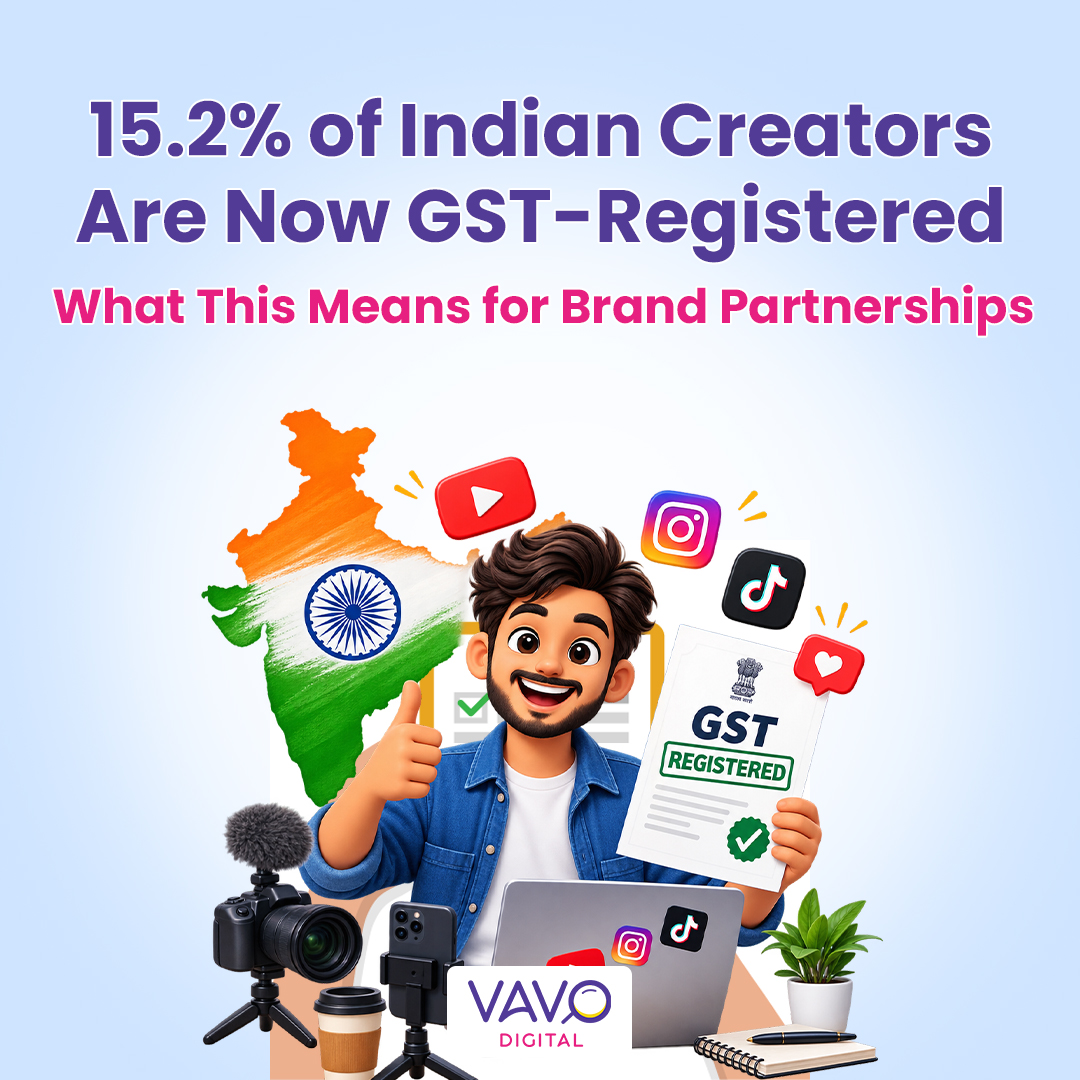
15.2% of Indian Creators Are Now GST-Registered. What This Means for Brand Partnerships
For years, working with Indian creators often looked informal by design. A DM negotiation, a UPI transfer, a barter deal, a handshake understanding of deliverables. That informality is disappearing fast, and the number driving that shift is smaller than you'd expect.
15.2% of India's active creators are now registered as a business entity or GST individual, according to a 2026 report, which drew on data from over 2 million creators. That figure is quietly becoming the new minimum threshold for institutional brand partnerships.
Here's what's behind that number and what it actually changes for brands vetting and contracting creators going forward.
Why GST registration is the metric that matters right now
India's creator base spans 4.0 to 4.4 million active professionals, with Instagram serving as the primary platform for 3.3 to 3.7 million of them. Within a base that large, business incorporation is the clearest signal of which creators are operating as professional entities and which are still working informally. This establishes a new entry barrier for institutional brand partnerships, making the GST-registered creator the new baseline for enterprise engagement. That phrase, entry barrier, is worth sitting with. It means a growing share of brands, particularly larger and more risk-conscious ones, are now filtering out creators who can't issue a proper invoice before the brief even goes out. The formalisation isn't happening in isolation either. AI has compressed the production overhead that was previously preventing India's creator class from operating at business scale. What used to require a small production team can now be done by a single creator with the right tools, which makes operating as a registered business entity a realistic and increasingly necessary next step for creators serious about scaling.What GST registration actually signals to a brand
A creator's GST registration isn't just a tax compliance checkbox. It's a proxy for a set of things brands genuinely care about when they're deciding who to work with at scale. It signals the creator treats this as a business, not a side hustle. Registration requires maintaining proper books, filing returns, and operating with a level of financial discipline that casual creators typically haven't adopted yet. It reduces legal and compliance risk for the brand. A registered creator can issue a proper tax invoice, which matters enormously for larger companies where finance and legal teams need clean documentation for every vendor payment. It correlates with professionalism in delivery. This isn't guaranteed, but in practice, creators who've formalised their operations tend to also have clearer contracts, more predictable turnaround times, and a better understanding of deliverables and usage rights. It's a longevity signal. A creator who has invested in formal business registration is more likely to be building a sustainable, long-term creator business rather than treating brand deals as occasional extra income.What this means for how brands should vet creators
If GST registration is becoming a baseline filter, the vetting process needs to catch up. A few practical shifts brands should be making:- Add registration status to your creator brief checklist: Before finalising a creator for anything beyond a small, low-stakes collaboration, ask directly whether they're GST registered or operating as a registered business entity. This should sit alongside audience authenticity and engagement quality as a standard vetting question, not an afterthought.
- Understand this doesn't replace other vetting; it adds to it: A GST-registered creator with a fake-follower-heavy audience is still a bad partner. Registration is a floor, not a full vetting framework. Continue checking engagement authenticity, audience demographics, and content quality alongside it.
- Build your contracting process around proper invoicing: As more creators formalise, brands should be updating their standard contracts and payment processes to expect and require GST-compliant invoicing, rather than continuing to run informal payment workflows built for a market that's moving past them.
- Don't over-filter on this alone, especially for nano and micro tiers: 61.1% of all surveyed creators operate in the nano tier of 1,000 to 10,000 followers, and this segment is where GST registration is least common simply because the income involved is smaller. If your strategy depends on nano-creator seeding or hyper-local campaigns, an overly strict registration requirement could shut out exactly the creators who make that strategy work. Reserve strict registration requirements for larger, higher-stakes partnerships.
The bigger shift
This formalisation trend isn't happening in isolation. It's connected to a broader institutional shift across India's creator economy. Brand accountability for influencer spend is accelerating too. 13.3% of brands now directly link influencer marketing spend to formal revenue targets, with a further 46.4% applying performance accountability on a campaign-by-campaign basis. And 62% of brand professionals confirm that long-term creator partnerships deliver superior ROI compared to one-off campaigns. Put together, these numbers describe an industry moving in the same direction from both sides. Creators are formalising into registered businesses. Brands are formalising their measurement and accountability standards. The informal, handshake-deal version of influencer marketing that defined the last decade is being replaced by something that looks a lot more like a standard vendor relationship, with all the paperwork, invoicing, and performance tracking that implies. For brands still running creator partnerships the old way- unregistered creators, informal payment terms, no clear performance benchmarks- the gap between their process and where the market is heading is growing every quarter.What should brands do next?
Institutional brand partnerships increasingly expect a baseline level of professionalism from creators, and GST registration is becoming the clearest signal of that. Brands that update their vetting and contracting processes now, rather than treating this as a minor administrative detail, will be better positioned as the market continues to formalise around them. If you want help building a vetting and contracting process that reflects where India's creator economy is actually heading, let's talk.FAQs
- What does it mean for a creator to be GST registered? It means the creator has formally registered as a business entity or individual under India's Goods and Services Tax framework, allowing them to issue proper tax invoices for brand collaborations. It's a signal of operating as a formal business rather than an informal individual.
- Why is GST registration becoming important for brand partnerships? Because it reduces compliance risk for brands, provides proper invoicing for finance and legal teams, and generally correlates with more professional, predictable working relationships. It's becoming a baseline requirement for institutional and enterprise-level brand deals.
- Should brands only work with GST-registered creators? Not necessarily, especially for nano and micro-tier partnerships where registration rates are lower simply due to smaller income levels. Registration is best treated as a requirement for larger, higher-stakes partnerships, alongside continued vetting for audience authenticity and content quality.
- What percentage of Indian creators are currently GST registered? 15.2% of India's active creators are registered as a business entity or GST individual, according to Kofluence's Decoding Influence: Annual Research Report 2026.
- How should brands update their contracting process for this shift? Add registration status to standard creator vetting checklists, update payment workflows to expect GST-compliant invoicing, and continue applying other vetting criteria like audience authenticity alongside registration status rather than relying on it as the sole filter.