August 19, 2026
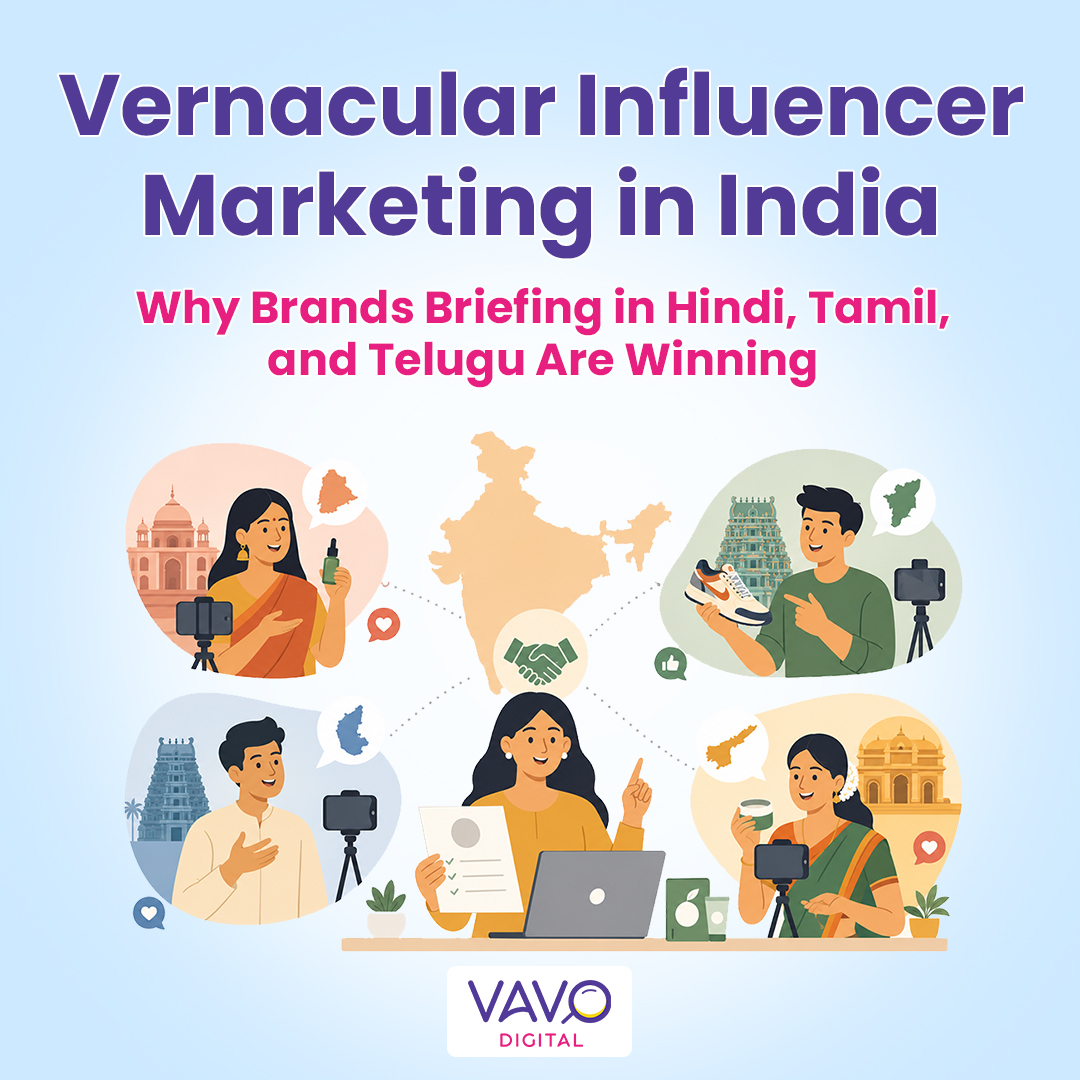
Vernacular Influencer Marketing in India: Why Brand Briefings in Hindi, Tamil, and Telugu Are Winning
Most influencer briefs in India are still written in English. For a country where 73% of internet users consume content in regional languages, that's a significant disconnect.
The brands that have figured this out aren't treating vernacular as a translation exercise. They're building campaigns in regional languages from day one: different creators, different briefs, different content, and the results are making it very hard to argue with the approach.
Here's what's actually happening, and what it means for how Indian brands should be thinking about influencer marketing in the second half of 2026.
The numbers brands can no longer ignore
Hindi, Tamil, Telugu, and Kannada creators collectively reach over 420 million users. Over 62% of creators are now receiving more vernacular briefs than they were two years ago. And Tamil creators alone grew their follower bases by more than 300% through 2025. By 2026, 90% of new internet users in India prefer consuming information in their native language. These aren't users at the fringe of the market. They're the next wave of Indian consumers in Tier 2 and Tier 3 cities, with real purchasing power, actively making decisions based on content they trust. For brands, a nano or micro creator posting in Malayalam or Telugu often outperforms a national celebrity on cost per engagement. The reach is smaller. The trust is not.Why vernacular works differently from translated content
This is the part most brands get wrong. Vernacular influencer marketing is not about taking an English brief, translating it into Tamil, and sending it to a regional creator. That approach produces content that sounds dubbed. Audiences can tell immediately. The trust that makes regional creators so effective evaporates the moment the content feels imported. Cultural transcreation is not about swapping words. It is about rebuilding meaning from the inside. It means embedding a Chhath Puja reference into a Bhojpuri skincare ad rather than a generic festival hook. It means understanding that humour in Haryanvi carries a specific cadence, rhythm, and self-awareness that a dubbed voice-over will never replicate. The brief has to start in the regional language context, not arrive there after the English version has already been approved. Casagrand, one of South India's largest real estate developers, tested this directly. When they shifted from English Facebook ads to Tamil-language ads for the same project, the regional ads generated 3 times the number of leads while bringing cost per lead down to one-third, resulting in nine times better engagement on the same budget. Same product. Same offer. Same price. Different language. Nine times better engagement. Also Read: Seasonal vs Evergreen Influencer Campaigns: Which One Should Your Brand Be Running?Which categories are winning with vernacular influencer campaigns
Not every category sees the same uplift from vernacular content. The ones where it makes the most dramatic difference are those where purchase decisions are built on trust and familiarity rather than aspiration. FMCG and food: A creator talking about a cooking oil, a spice brand, or a packaged food product in Telugu to a Telugu-speaking household in Vijayawada is not just reaching that audience. They're speaking to them in the language of their kitchen. The product integration feels natural in a way that no English-language creative can replicate. Fintech and BFSI: Financial trust is deeply personal. A creator explaining a savings app or an insurance product in Hindi to a first-generation digital user in Patna removes a layer of friction that no amount of Hindi subtitles on an English video can address. Comprehension is higher. The trust is higher. The conversion follows. D2C beauty and skincare: Regional creators producing content in local languages are capturing attention across Tier 2 and Tier 3 cities, creating stronger brand resonance with local audiences. For a beauty brand trying to expand beyond metro India, a Tamil micro-creator in Chennai or a Marathi creator in Pune reaches an audience with far stronger purchase intent than a Delhi-based macro creator posting in English. Edtech: Learning is language-dependent. Edtech brands that brief vernacular creators for regional language courses, upskilling content, and exam preparation are seeing significantly higher conversion than those running English-first campaigns for products that exist in regional languages.What a good vernacular influencer brief looks like
The brief is where most brands fall short. Here's what changes when you brief for vernacular:- Start with the language, not the message
- Brief for cultural context, not just language:
- Choose creators native to the language, not just fluent in it
- Don't translate the English brief. Rebuild it
The opportunity most brands are still missing
CPMs for Bhojpuri or Tulu content remain lower than Hindi or English, because the advertising industry has not yet caught up with where the audience has moved. That gap is the opportunity. Vernacular influencer marketing in India is still underpriced relative to the audience quality it delivers. South India now accounts for close to a third of regional influencer spend — but the creator costs and CPMs haven't caught up with that demand yet. The brands that move seriously into vernacular creator partnerships now are buying audience trust at a price that won't exist in two years. Once the market catches up, the cost advantage disappears. The brand equity built during this window doesn't. At Vavo Digital, the shift we're seeing across campaigns is clear. Brands that add a genuine vernacular track to their influencer strategy- not a translated version of the metro campaign, but a brief built from the ground up in the regional language- are consistently outperforming those that don't on engagement, conversion, and cost per outcome.The bottom line
India has 22 officially recognised languages. The brands that treat influencer marketing as a Hindi-and-English exercise are reaching a fraction of the market they think they're reaching. Vernacular isn't a niche strategy. It's where the next hundred million Indian consumers are, and where the engagement rates, the trust, and the purchase intent are strongest right now. If you want to build a vernacular influencer strategy that goes beyond translation, let's talk.FAQs
- What is vernacular influencer marketing? It's influencer marketing conducted in regional Indian languages: Hindi, Tamil, Telugu, Bengali, Marathi, Kannada, and others, with creators who are native to those languages and cultural contexts. It's not a translation of English content. It's campaigns built from scratch in the language of the target audience.
- Why is vernacular influencer marketing growing in India? 73% of Indian internet users consume content in regional languages, and 90% of new internet users in 2026 prefer their native language. As brands expand beyond metro India into Tier 2 and Tier 3 markets, vernacular creators are the most effective way to reach audiences who make purchasing decisions in their own language.
- Which languages should brands prioritise for vernacular influencer campaigns? Hindi, Tamil, Telugu, Bengali, and Kannada have the largest creator ecosystems and highest engagement. For specific regional campaigns, Marathi, Gujarati, Punjabi, and Bhojpuri creators are delivering strong results in their home markets.
- Is vernacular influencer marketing more expensive than English-language campaigns? Currently no. CPMs for regional language content remain lower than Hindi or English because the advertising market hasn't caught up with where the audience has moved. It's one of the most cost-efficient influencer marketing opportunities in India right now.
- How do I find the right vernacular creator for my brand? Look for creators who are native to the language, not just fluent in it. Check whether their content reflects genuine cultural familiarity with their audience, not just language competency. Engagement rate and comment quality matter more than subscriber count in vernacular markets.
- Can I run the same campaign in multiple regional languages? Yes, but not by translating the same brief. Each language track needs its own cultural brief, its own creator, and its own content direction. Audiences in different regional markets respond to different cultural references, humour styles, and communication tones.