August 19, 2026
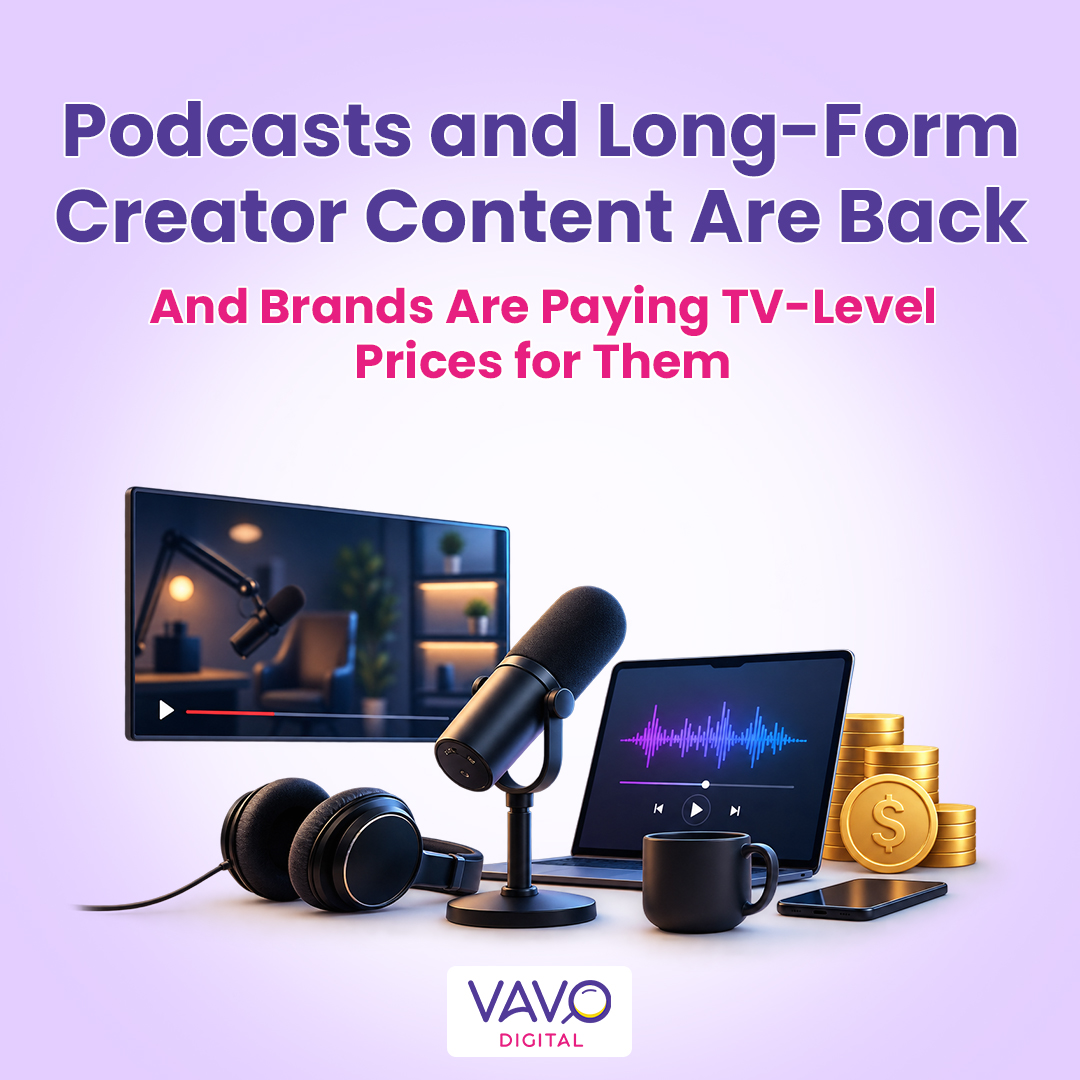
Podcasts and Long-Form Creator Content Are Back, and Brands Are Paying TV-Level Prices for Them
For years, the influencer marketing playbook was simple. Shorter is better. Attention spans are shrinking. Get the message in within three seconds or lose the viewer.
That playbook is being rewritten. Creator advertising spending reached $37 billion in 2025 and is projected to hit $44 billion in 2026, with brands increasingly buying long-form creator content the way they used to buy television slots. Podcasts specifically are becoming one of the highest-trust, highest-completion-rate formats in the entire creator economy, and Indian brands are only just beginning to catch up.
Here's what's driving this shift and which brands are already ahead of it.
The numbers behind the shift
57% of marketers plan to increase their focus on creator and influencer partnerships in 2026, making it the top ad category for increased investment. Podcasts sit right at the center of that shift. Podcast ad spend is growing 8.6% in 2026, ahead of digital display, gaming, and digital audio excluding podcasts. But the growth story isn't really about reach. It's about attention quality. A host-read ad in a podcast someone actively chose to download, often while commuting, working out, or doing chores, gets consumed at completion rates that frequently exceed 90%. A pre-roll banner ad has to fight for a fraction of a second of attention against forty open browser tabs. A podcast ad doesn't have that problem. Attention isn't estimated. It's functionally guaranteed by the format itself. That completion rate premium is exactly why brands are willing to pay TV-level prices for it.Why podcasts specifically are winning brand trust
There's a trust dynamic in podcasts that short-form content simply can't replicate. What podcasters have, which sits a little above other influencers and celebrities, is that the connection they have with their communities is very strong because people are engaging with long-form content. Audiences move fluidly between short-form snippets and long-form episodes, but it's the long-form relationship that builds real familiarity and authenticity around a creator's recommendations. People know that when a podcast host talks about a brand, it comes from an authentic place. It's credible. It's not just there because they're getting paid for it. That trust translates directly into recall. The host-read brand recall premium over produced spots isn't an accident. It's the direct result of the credibility listeners assign to recommendations from voices they choose to spend time with daily. In India specifically, this dynamic is amplified by how new the format still is in the advertising mainstream. Brands that get in early are building the same kind of category ownership that early YouTube sponsors built a decade ago, before every tech brand had a review deal locked in.What brands are actually paying, and how deals are structured
Host-read ad reads on established Indian podcasts routinely command CPMs in the range of ₹1,500 to ₹4,000 for premium shows with engaged, niche audiences. That looks expensive next to programmatic display CPMs until you factor in completion rate. A display ad reaching a fraction of its impressions is not the same asset as a host-read ad that gets heard start to finish by 9 out of 10 listeners. The deal structures themselves are shifting too. Presenting sponsorships now typically include a pre-roll mention alongside mid-roll and post-roll host-read ads, often locked in for an entire season rather than a single episode. Some brands are negotiating full share-of-voice arrangements across specific episodes. Others are moving even further upstream, treating podcast partnerships less like media buys and entirely like talent partnerships. A category lead at a D2C wellness brand that has run sustained sponsorships across three Indian business and lifestyle podcasts over the past eighteen months put it plainly. They stopped thinking of it as media buying and started thinking of it as talent partnership. That distinction matters. A media buy is transactional. A talent partnership compounds.Which brands are already ahead
The brands moving fastest into podcast sponsorship in India tend to fall into three categories. D2C and wellness brands are among the earliest and most consistent podcast sponsors, largely because the format's intimacy and completion rates align well with categories that require a degree of trust before purchase: supplements, skincare, mental health products, and financial wellness tools. BFSI and fintech brands are drawn to the format for similar reasons. A 10- to 15-minute host-read segment gives a fintech brand far more room to explain a product's actual value than a 15-second Reel ever could, and podcast audiences skew toward exactly the financially engaged, research-driven listener these brands want. B2B and SaaS brands are finding podcasts particularly effective for reaching decision-makers who consume long-form business and marketing content during commutes and downtime, a captive audience that's much harder to reach through traditional short-form influencer formats. Across all three categories, the brands winning are the ones treating podcast sponsorship as a multi-episode, multi-month commitment rather than a single ad buy. That's where the trust compounding actually happens.How to brief a podcast sponsorship the right way
Podcast sponsorships fail for a predictable reason. Brands treat the brief the same way they'd brief a 30 second video ad, and the host reads out a script that immediately sounds like a script. Give the host the message, not the copy: The entire value of a host-read ad comes from it sounding like the host talking, not the host reading. Brief the key points, the claim you need made, and any disclosure requirements. Let the host write it in their own voice. Commit to more than one episode: A single sponsored episode gets heard once. A sponsorship that runs across a season builds the kind of familiarity that actually shifts purchase behaviour. If the budget allows for it, a multi-episode commitment consistently outperforms a one-off buy on every meaningful metric. Match the show to your actual buyer, not just the download numbers: A business podcast with a smaller, highly engaged listener base of decision-makers is often a better fit for a B2B or fintech brand than a general entertainment podcast with ten times the downloads and none of the purchase intent. Track beyond the first click: Podcast attribution is genuinely harder than short-form influencer tracking. Use dedicated promo codes, custom landing pages, and post-purchase surveys asking how a customer heard about you. The completion rate and recall premium podcasts deliver won't show up cleanly in last-click attribution.What this means for your influencer strategy
The brands that figure out podcast sponsorship early aren't just buying ad inventory. They're building the same kind of trusted, always-on creator relationship that works so well in short-form influencer marketing, just in a format built for depth instead of speed. If you're already thinking about long-term creator partnerships over one-off posts, podcasts are a natural extension of that same strategy, not a separate channel. The format rewards patience and consistency over flashy one-off buys. For brands willing to commit to more than a single episode, the trust and completion rates on offer are hard to match anywhere else in the creator economy right now. If you want help identifying the right podcasts and building a long-form creator strategy for your brand, let's talk.FAQs
- Why are brands spending more on podcast advertising in 2026? Because podcast ads deliver completion rates that frequently exceed 90%, far higher than short-form video or display advertising. Combined with the trust listeners place in podcast hosts they choose to spend time with regularly, this makes podcast sponsorship one of the highest-recall ad formats available right now.
- How much does a podcast sponsorship cost in India? Host-read ad reads on established Indian podcasts typically command CPMs between ₹1,500 and ₹4,000 for premium shows with engaged, niche audiences. Pricing varies based on show size, audience niche, and whether the deal covers a single episode or a full season.
- What's the difference between a podcast ad and a talent partnership? A podcast ad is typically a single transactional buy, often a pre-roll or mid-roll mention on one episode. A talent partnership involves a sustained, multi-episode or multi-season relationship where the host becomes a genuine long-term brand advocate, similar to an always-on influencer partnership.
- Which categories of brands benefit most from podcast sponsorships? D2C wellness and skincare brands, BFSI and fintech companies, and B2B or SaaS brands see particularly strong results, largely because podcast audiences tend to be research-driven and receptive to longer explanations of product value.
- How should brands write a podcast ad brief? Give the host the key message and any required disclosures, not a fixed script. Host-read ads work because they sound authentic. A script read word for word breaks that authenticity and reduces the format's core advantage.
- How do you measure the ROI of a podcast sponsorship? Use dedicated promo codes, unique landing page URLs, and post-purchase surveys asking customers how they heard about the brand. Last-click digital attribution tends to undercount podcast-driven conversions because much of the impact happens during listening, not immediately after.