September 9, 2026
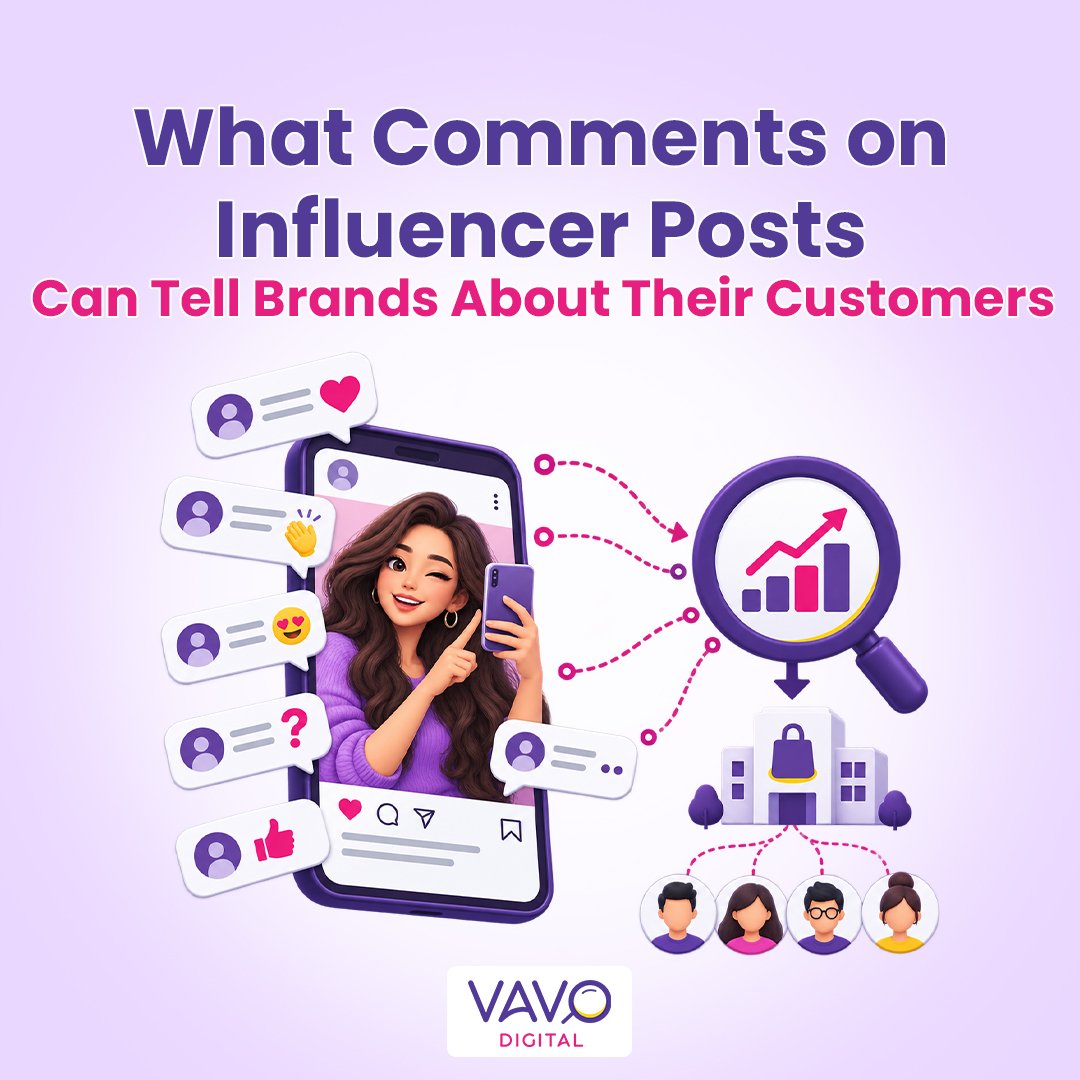
What Comments on Influencer Posts Can Tell Brands About Their Customers
Every brand tracks likes. Most track shares. Almost none read the comments properly, and that's exactly where the real customer research is happening for free.
For years, follower count and engagement rate were the two metrics that mattered in an influencer campaign report. In 2026, that's changing. The real insight, and the real influence, is shifting to a space brands have historically scrolled past: the comment section. Comments are where the raw, unfiltered conversation happens. They reveal sentiment, feedback, and trends in real time. A viral post might rack up likes, but it's the comments that show whether an audience actually cares.
Here's what brands can actually learn from a comment section, and how to read it properly instead of just glancing at the count.
Why comments matter more than Likes
A like takes half a second and means almost nothing. A comment takes effort. Someone stopped scrolling, formed a thought, and took the time to share their opinion or feedback. That's a meaningfully different signal. UGC-style, unpolished influencer content often gets more meaningful comments than heavily produced posts. Instead of just leaving an emoji, people are more likely to ask questions, share their experiences, or give their opinions. And that's where the useful customer insight lies. A comment that says "does this actually work for oily skin?" tells a brand something a like count never could: there's a specific hesitation standing between this audience and a purchase. This is also why brands can learn so much from influencer comments. Comments, DMs, and reviews are where potential customers ask questions, share concerns, and give honest feedback. This is where you can see what people really think about the product and what might be stopping them from buying it.What comments reveal
Real objections, before they cost you a sale If the same question keeps showing up under a creator's post, that's not one confused person. That's a pattern. "What's the shade range like?" "Does this ship to Tier 2 cities?" "Is this suitable for sensitive skin?" These are the exact objections a customer has right before they decide not to buy. A brand that reads these comments can fix the product page, the caption, or the next brief before losing ten more customers to the same doubt. Which specific benefit actually lands A creator might mention five features of a product in one video. The comments will tell you which one people actually cared about, because that's the one they'll quote back. If ten comments mention "the fact that it's cruelty-free" and none mention the price point, that's a genuinely useful signal for how the next campaign should be briefed. Purchase intent, in plain language "Where can I buy this?" "Sending this to my sister." "Adding to cart right now." These comments are as close to a real-time sales signal as influencer marketing gets. Tracking how often a creator's audience produces intent-driven comments, not just praise, is a far better predictor of conversion than watching the like count climb. Who your audience actually is, beyond your assumptions The language, concerns, questions, and references people share in comments can reveal customer behaviour patterns that a brand may not have considered. A skincare brand targeting 25- to 35-year-old urban women might find its most engaged comment section is full of mothers asking if the product is safe to use during pregnancy. That's not a distraction from the target audience. It could be a new customer segment worth building a campaign around. Whether the engagement is even real Comment quality is also a fraud check. If half the comments on a sponsored post read like "🔥🔥 so cool babe!" repeated with minor variations, that's often a sign of engagement pods rather than a genuinely engaged audience. Brands vetting creators should be reading comment sections as closely as they check follower authenticity, because comment pods are cheaper to fake than followers and easier to miss.How to build this into a campaign process
Reading comments manually after a campaign ends is better than nothing, but it's not a strategy. Here's what a proper comment-analysis workflow looks like. Read comments during the campaign, not after: Within 48 hours of a post going live, comment patterns are usually clear enough to act on. Waiting until the final report means the insight arrives too late to adjust anything. Separate sentiment from noise: Not every comment is a signal. A generic "so cute" tells you nothing actionable. A specific objection, a repeated question, or a comparison to a competitor product tells you something you can actually use. Track comment depth as a KPI, not just comment count: A post with 200 comments that are all single-word reactions is a different result from a post with 80 comments that include real questions and opinions. The second one is doing more work for your customer research, even with a lower raw number. Loop findings back into the next brief: If comments on one creator's post reveal a recurring objection about price, the next creator's brief should proactively address that concern rather than repeating the same gap. This is where comment analysis actually pays for itself, by making every subsequent campaign sharper than the last. Use comments to improve product messaging, not just marketing: Some of the most useful comment insights aren't about the campaign at all. They're about the product. A pattern of comments asking for a feature that doesn't exist yet is a genuine product signal, not just marketing feedback.Why this matters more for always-on creator relationships
Comment analysis becomes significantly more valuable when it's tracked across an ongoing creator relationship rather than a single post. A brand running long-term partnerships instead of one-off campaigns can watch how the same audience's comments evolve over months, whether objections are getting resolved, whether purchase-intent language is increasing, and whether trust in the creator's recommendation is compounding the way it should. A single sponsored post gives you one snapshot of audience reaction. A long-term creator relationship lets you see how that audience's opinions, questions, and purchase intent change over time. That trendline is far more useful for understanding what a customer segment actually thinks about a brand than any individual campaign report will ever be.What this means for how brands brief and measure campaigns
The brands getting ahead of this shift aren't necessarily running more influencer campaigns. They're extracting more value from the campaigns they're already running by treating the comment section as a research asset instead of a vanity metric to skim past. If your next campaign report only lists reach, engagement rate, and follower growth, it's missing the part of the data that actually tells you something about your customer. The comments were there the whole time. At Vavo Digital, campaign reporting goes beyond reach and likes. We also analyse audience sentiment, questions, concerns, feedback, and purchase intent to show you what people actually think about your campaign. Talk to usFAQs
- Why are comments more valuable than likes for understanding customers? A like requires almost no effort and reveals very little. A comment requires someone to stop, form a thought, and share it publicly, which makes it a far stronger signal of genuine interest, objection, or intent than a passive like ever can be.
- What should brands actually look for in influencer post comments? Repeated questions or objections, specific product benefits people mention unprompted, purchase-intent language like "where can I buy this," and any patterns that reveal an audience segment different from what the brand originally targeted.
- How can comments help detect fake engagement on influencer posts? Genuine audiences write varied, specific comments. Engagement pods tend to produce repetitive, generic praise like "so cool" or fire emojis with little variation. A high comment count paired with low comment depth is often a sign of inauthentic engagement.
- Should comment analysis happen during a campaign or after it ends? During. Most useful comment patterns emerge within the first 48 hours of a post going live, and reading them in real time allows a brand to adjust messaging, address objections in follow-up content, or brief the next creator more sharply rather than only learning after the campaign is complete.
- Does comment analysis matter more for one-off campaigns or long-term creator partnerships? It's valuable in both, but significantly more powerful in long-term partnerships. Tracking how the same audience's comments evolve over several months reveals whether objections are being resolved and whether trust in the creator's recommendation is compounding, insight a single post can't provide.