September 16, 2026
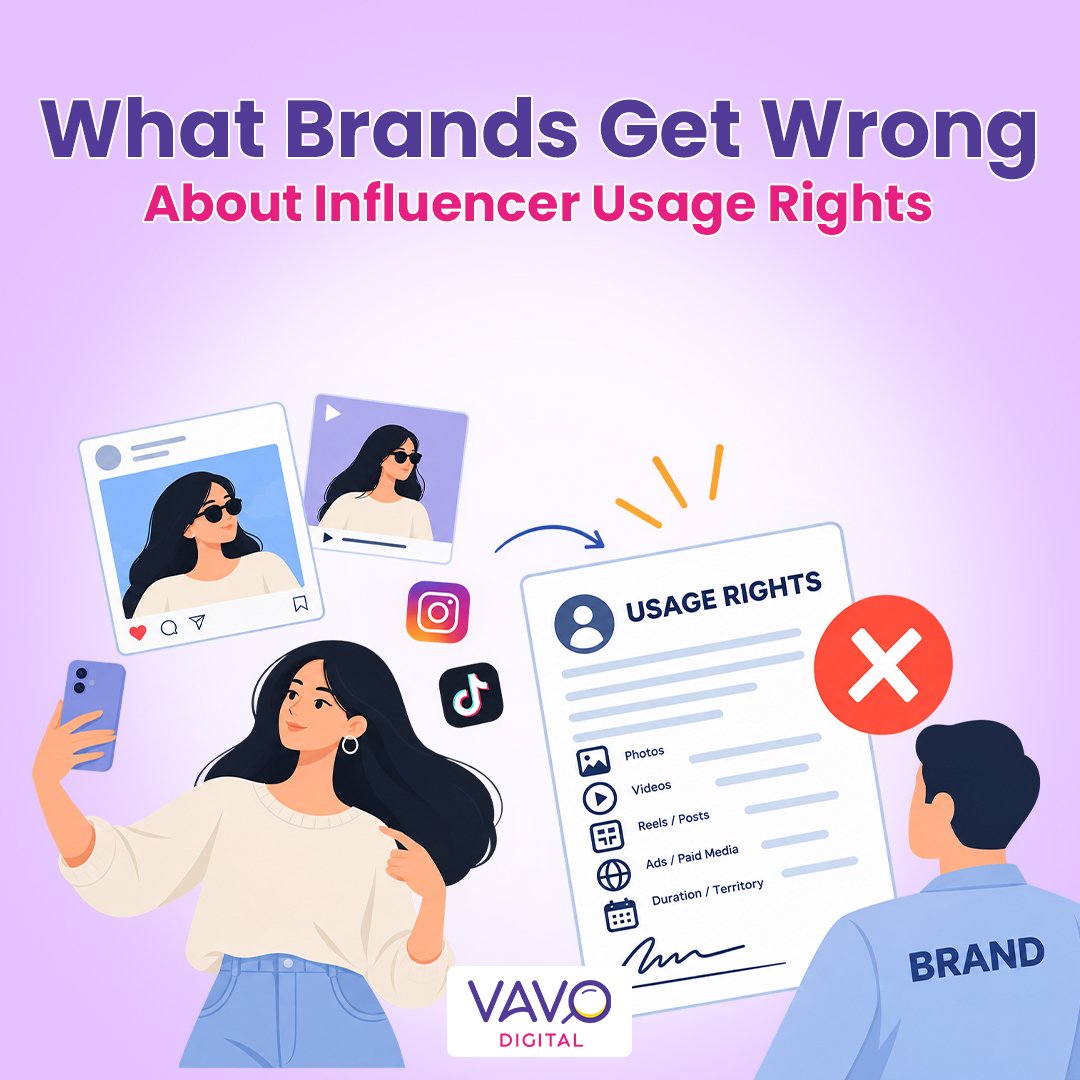
What Brands Get Wrong About Influencer Usage Rights
A campaign wraps, the content performs well, and someone on the paid media team decides to run the top post as an ad. Six months later, legal flags it. The usage rights expired 90 days ago. Now the brand has to call the creator, negotiate a new fee, and pull the ad while it’s still running.
This happens more often than brands expect, and usually, nobody meant for it to happen. The problem is often a contract that didn’t account for how the content might be used later.
A 2026 study found that securing usage rights or content permissions was one of the top barriers to scaling creator content, cited by 54% of paid media managers and marketing executives surveyed.
Here’s what brands consistently get wrong about usage rights, and what a cleaner approach looks like.
Mistake one: Treating usage rights like insurance
The most common mistake is buying the broadest possible rights upfront, just in case the content turns out to be good. Brands treat usage rights like insurance. Buy everything up front, just in case. It's backwards. Usage fees typically add 20% to 50% on top of a creator's base rate, and perpetual rights can add 50% to 100% more. You're paying that premium before you know whether the content is any good, and you can't know until you run it. This is the wrong order of operations. A brand doesn't know which piece of content from a campaign will actually be worth amplifying until after it's live and the organic data comes in. Paying for perpetual, all-channel rights on every single piece of content produced, most of which will never be run as a paid ad, is money spent solving a problem that hasn't happened yet. The smarter approach: buy organic usage rights as part of the base fee, then price paid usage, whitelisting, and any extension separately, once you actually know which content is worth paying more for.Mistake two: Signing vague "all usage rights" language
"Full usage rights" and "all usage rights" sound efficient on paper. In practice, that language sweeps in paid advertising, out-of-home, and perpetuity, often without either side fully realising what's been agreed to. A brand that signs this either overpays significantly for rights it will never use, or underpays for the actual commercial value it's extracting from the creator's content and audience. A cleaner structure separates these into distinct, individually priced components: Organic usage: The content living on the brand's own social channels, typically included in the base fee or priced modestly above it. Paid usage: Running the content as a standard ad from the brand's own account, priced as an add-on scoped to a specific duration and channel list. Whitelisting: Running the ad directly from the creator's account, which is a fundamentally different and more valuable service than standard usage rights, since it borrows the creator's actual handle and audience trust rather than just their footage. This deserves its own line item and its own price. Treating these as one bundled clause is how brands end up either overpaying for rights they don't need or under-licensing content they're actively running as ads.Mistake three: Not thinking about duration until it's too late
Usage rights can last anywhere from 30 days to perpetuity, and duration drives price harder than almost any other variable in the negotiation. For a first campaign with a creator, a short, fixed-term license is far easier to evaluate honestly than perpetual rights, since a 30- to 90-day test window gives a paid team enough time to compare performance without committing to a year of rights on unproven content. The operational risk shows up when nobody owns tracking these expiry dates. Authorisation codes for whitelisting expire on a timer nobody watches, and campaigns die quietly when they do, with a paid ad simply stopping mid-flight with no error message explaining why. The practical fix is building a usage rights calendar into campaign operations from day one, the same way a brand would track any other recurring compliance deadline, and renewing before expiry rather than scrambling after a campaign has already gone dark.Mistake four: : Wanting more usage without paying more
Some brands push for broader usage rights across more channels and longer durations without adjusting compensation to match, effectively transferring ongoing commercial value from the creator to the brand for free. This isn't just an ethical issue. It's increasingly a legal and relationship one. Creators, having become more sophisticated about the actual value of their content and audience, are pushing back with time-limited licenses subject to renewal fees, which means brands trying to negotiate broad rights on the cheap are simply going to encounter more resistance and slower deal cycles going forward. The relationship works better, and moves faster, when expanded usage is explicitly tied to expanded compensation from the start. If a brand wants twelve months of paid usage instead of three, that's a different price. If a brand wants whitelisting on top of standard paid usage, that's a separate, explicitly priced line. Clarity here isn't just fair to the creator. It removes an entire category of friction and renegotiation later.Mistake five: Ignoring platform and jurisdiction risk
Usage rights contracts often assume the platform the content lives on will simply continue existing under the same terms indefinitely. That assumption has already been tested. TikTok's extended divestiture uncertainty made concrete a risk that was always present: a creator's entire deliverable, and by extension a brand's usage rights over that deliverable, can depend on a platform's continued existence or terms of service, something neither party fully controls. There's also a jurisdictional gap many contracts miss entirely. Following one country's disclosure and advertising rules alone doesn't necessarily satisfy a regulator in a different market where the content is also being run as a paid ad, exposing both brand and creator to liability in a jurisdiction the original contract never anticipated. For brands running international paid amplification off Indian-created content, or vice versa, this is a genuinely underestimated risk sitting quietly inside an otherwise standard usage clause.What a cleaner usage rights structure actually looks like
Bringing all of this together, a well-structured usage rights clause in 2026 typically includes: A clearly scoped base license covering organic use on the brand's own channels, included in or lightly priced above the creator's base fee. A separately priced paid usage add-on, scoped to a specific duration, typically 30 to 90 days for a first-time test, with clear channel and geography limits rather than blanket "all digital channels" language. Whitelisting priced as its own line item, distinct from standard paid usage, reflecting the additional value of running ads from the creator's own account. A defined expiry and renewal process, tracked against actual media flight dates rather than left to a default the paid team forgets to monitor. AI training and likeness modification rights addressed separately, priced on their own terms rather than assumed to be bundled into a standard usage grant. This structure isn't more restrictive for brands. It's more precise, which means brands stop paying for optionality they never use, and stop discovering expired rights mid-campaign because nobody built the tracking in from the start.Why this matters more as creator relationships get longer
Getting usage rights right becomes significantly more important as brands shift toward the kind of ongoing creator partnerships that consistently outperform one-off campaigns. A single miswritten usage clause on a one-time post is a contained problem. The same mistake repeated across a roster of 20 to 50 creators on a recurring monthly cadence compounds into a genuinely expensive operational mess, one expired authorisation and one awkward renegotiation at a time. Brands building long-term creator programs are better served by a standardised, cleanly tiered usage rights template applied consistently across every creator relationship, rather than negotiating each one from scratch and hoping nothing gets missed.The bottom line
Usage rights aren't the boring legal clause everyone skips to get to the creative brief. They're one of the clearest places where a poorly structured agreement quietly costs a brand money, either through overpaying for rights that go unused, or through compliance exposure when content runs past what was actually licensed. Getting this right isn't complicated. It just requires treating usage rights as something to price deliberately, tier by tier, rather than something to bundle vaguely and hope nobody asks questions about later. If you want help building a usage rights framework that scales cleanly across an ongoing creator roster, let's talk.FAQs
- What's the difference between usage rights and whitelisting? Usage rights govern how long and where a brand can run a creator's content as an ad from its own account. Whitelisting is a separate, more valuable arrangement where the ad runs directly from the creator's own account, borrowing their handle and audience trust rather than just their footage.
- How much do usage rights typically cost on top of a creator's base fee? Usage fees typically add 20% to 50% on top of a creator's base rate for paid usage, with perpetual rights adding 50% to 100% more. Whitelisting is usually priced as a separate line item on top of standard usage rights.
- Should brands ask for perpetual usage rights? Rarely. Perpetual rights are expensive, and most ad creative fatigues within a few months anyway, meaning brands typically end up paying for far more time than they'll actually use. A short, fixed-term license, renewed only if the content continues performing, is usually a better structure.
- What happens if a brand runs an ad past its usage rights expiry? It's a license breach, and it happens far more often through oversight than intent, typically because a paid media team inherits an asset without visibility into the original contract terms. This can result in the ad being pulled mid-flight and can require a retroactive fee negotiation with the creator.
- Why do creators increasingly push back on broad usage rights requests? Creators have become more aware of the actual commercial value their content and audience trust generate for a brand. Broad or perpetual rights that aren't tied to proportionally higher compensation effectively transfer that value to the brand for free, which is why many creators now counter with time-limited licenses subject to renewal fees instead.