September 15, 2026
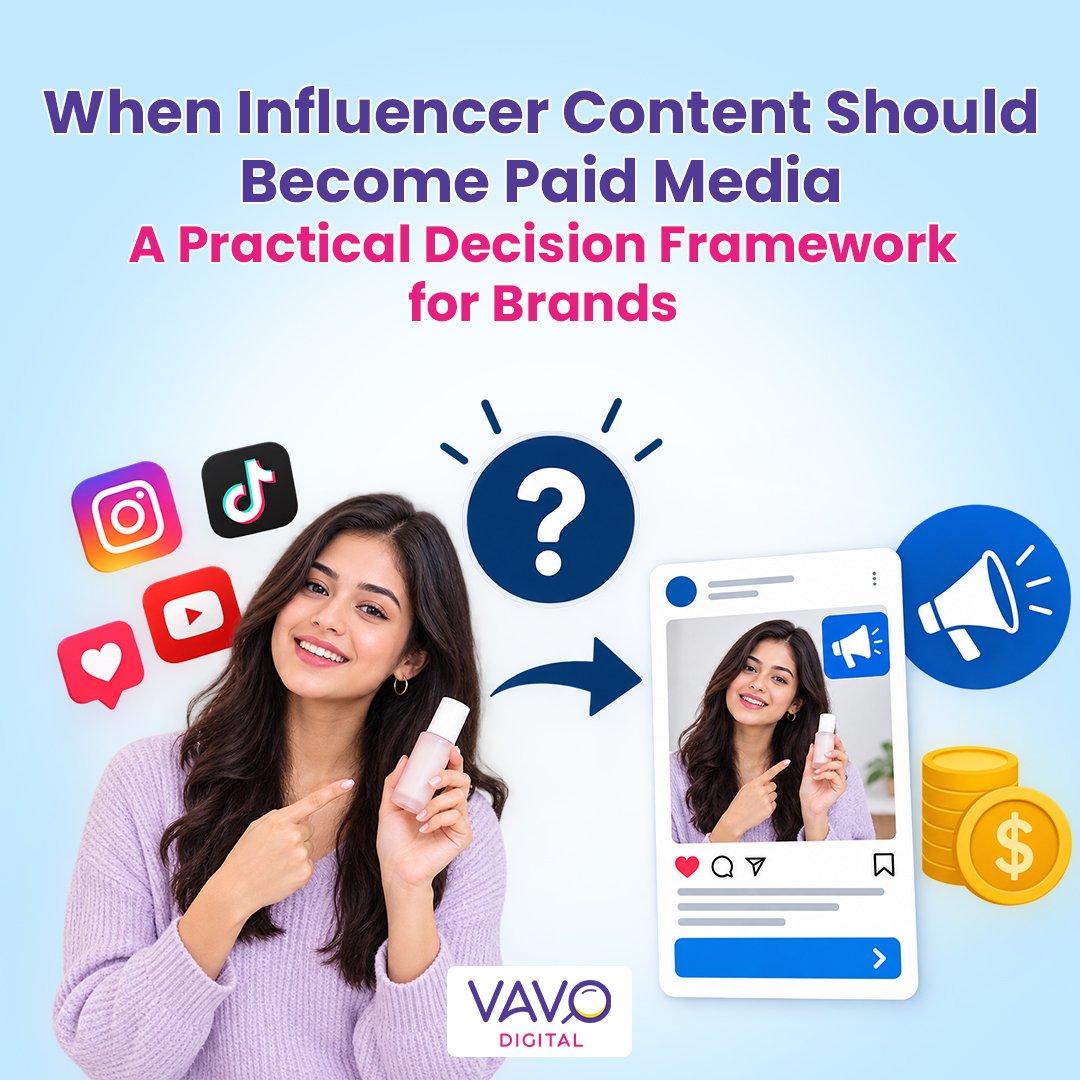
When Influencer Content Should Become Paid Media: A Practical Decision Framework for Brands
A creator's post goes live and does really well. Comments are genuine, people seem to actually care, and then the brand does what most brands still do with good content: nothing. It just sits on the creator's profile, picks up organic reach for a few days, then gets buried under whatever gets posted next.
That's wasted money. Not every piece of influencer content is worth putting ad spend behind, but the good ones are usually easy to spot once you know what to check for. Here's a simple framework for figuring out when to move content from organic to paid, and which method actually makes sense for it.
Why this decision matters more than it used to
As ad costs on Meta and other platforms keep climbing, using influencer content in paid campaigns is one of the more reliable ways to bring down cost per conversion, rather than pouring more budget into brand-handle ads that audiences have gotten very good at ignoring. Boosted influencer content is also consistently outperforming traditional brand ads on click-through rate and return on ad spend across platforms, which is a big part of why this decision has moved from a nice-to-have to something brands are expected to have a process for. There are two distinct ways to put paid money behind creator content in India, and they're not interchangeable. Boosting amplifies a brand's own post with paid spend and generally doesn't require creator sign-off. Whitelisting, known as Partnership Ads on Meta, runs the ad directly from the creator's account with their explicit permission, and that authentication is exactly why it typically outperforms boosted brand posts on both click-through and conversion. Choosing the wrong method for the wrong content is one of the quieter ways brands waste paid budget without realising it.The decision framework: When to move content to paid
Start with organic performance, not intuition Unless a brand is specifically paying for content creation without any organic post at all, the content chosen for amplification should already have shown strong organic engagement. If a post underperformed organically, paid spend behind it rarely fixes the underlying problem. Paid media amplifies what's already working. It doesn't rescue what isn't. Check whether the content can travel beyond the creator's own audience A post that resonates deeply with a creator's existing 50,000 followers might still fall flat with a broader paid audience who has no context for the creator or the joke. The strongest paid candidates are pieces of content that can resonate with an audience wider than the creator's immediate following, not just their most loyal fans. Read the comments before deciding This is the step most brands skip. Comments with real questions about product details, pricing, or availability are a strong signal the audience is already in a buying mindset, and that's exactly the kind of content worth putting media budget behind. A post with high like counts but shallow, generic comments is a weaker signal than a post with fewer likes but comments that show genuine purchase consideration. Confirm the creator's audience quality before spending Once real money is involved, audience authenticity stops being a nice-to-have and becomes a required check. A creator with inflated or bot-heavy followers will burn paid budget fast, since the ad ends up showing to accounts that were never going to convert in the first place. Vetting this before spending is far cheaper than discovering it after. Match the format to the platform it's meant to scale on Not every content format performs equally well as an ad. A format that works beautifully as an organic Reel doesn't automatically translate into a strong paid placement. Choosing content in a format your chosen platform's ad system actually favours matters as much as the content itself.What is Better: Boosting or Whitelisting
The honest answer is that neither one is universally "better." They're built for different jobs, and the parameters below show why.| Parameter | Boosting | Whitelisting (Partnership Ads) |
| Creator sign-off | Not required; brand boosts its own post | Required; runs through the creator's ad account access |
| Who the audience sees it from | The brand's handle | The creator's handle, with an "In partnership with" or "Paid partnership" tag |
| Perceived authenticity | Lower, since audiences recognise it as a brand ad | Higher, since it still reads as the creator's own content |
| Targeting control | Limited to standard ad-account targeting | Full targeting control, same as any other ad set |
| Typical CTR and conversion | Moderate | Consistently higher, since the creator's credibility carries into the paid placement |
| Setup and approvals | Fast; no third-party access needed | Slower; needs the creator to grant partnership access, which can take a few days |
| Cost efficiency at scale | Cheaper to set up, but often needs more spend to hit the same results | Higher upfront coordination cost, but usually a better cost per conversion over time |
| Best suited for | Content the brand owns outright, or quick amplification with no creator dependency | High-performing creator content meant to drive cold-audience conversions |
So, which should you pick?
If the content is already brand-owned, or speed matters more than authenticity, boosting gets the job done. But for content built on a creator's voice, the kind with genuine engagement and purchase-intent comments discussed earlier, whitelisting is almost always worth the extra coordination. The performance gap is rarely small enough to ignore. One practical note: whitelisting access needs to be requested (and ideally written into the brief) well before the campaign goes live, since creators can take time to grant partnership permissions. Waiting until a post is already performing well to ask for access is a common way brands lose the window entirely. Also Read: Creator-Led Commerce in India: How Brands Are Turning Influencer Content Into SalesGetting the operational details right
Lock in usage rights before you need them, not after Every paid amplification plan needs usage rights secured upfront, specifying how long the brand can run the content as a paid ad, whether that's a fixed 30-day window or something longer. Negotiating this after a post has already gone viral organically is a much weaker position than building it into the original brief. Keep organic and paid in sync, not running as two separate strategies Paid boosts perform best when timed to coincide with peaks in organic influencer activity, and insights from paid performance should feed back into how future organic content gets briefed. Treating organic and paid as two disconnected workstreams means both perform worse than they would together. Set clear performance thresholds, not vague check-ins Brands running this at scale benefit from defined triggers rather than ad hoc reviews; for instance, a rule that a creative refresh kicks in automatically if cost per acquisition rises more than 10% above target, or that scaling accelerates if return on ad spend beats target for several consecutive days. Turning this into a system rather than a series of one-off decisions is what actually makes paid amplification a repeatable, scalable channel.Building this into how briefs get written
The best time to make this decision easier isn't after the content is live. It's at the brief stage. If a brand already knows a piece of content is likely to be amplified as paid media, the creator brief should account for that from the start, securing usage rights, briefing for a hook that will hold up in a cold-audience paid placement, and choosing a creator whose content style is already known to convert under paid spend rather than just organically. Brands that treat this as an afterthought tend to discover, right when a post is performing best, that they never actually negotiated the rights to run it as an ad. That's an entirely avoidable problem with the right upfront planning.The bottom line for brands
Not every good post needs to become an ad, and treating every piece of content as a paid candidate wastes both budget and attention. But a clear framework, strong organic signal, broad audience appeal, genuine purchase-intent comments, verified audience quality, and the right format for the platform make the decision far less subjective than most brands currently treat it. If you want help building a paid amplification process for your influencer content, let's talk.FAQs
- What's the difference between boosting and whitelisting influencer content? Boosting puts paid spend behind a post without requiring the creator's explicit sign-off and offers limited targeting. Whitelisting runs the ad from the creator's own account with their permission and full targeting control, which typically performs better because it carries the creator's authenticity into the paid placement.
- How do I know if a piece of influencer content is worth boosting? Look for content that already shows strong organic engagement, comments that reflect genuine purchase intent rather than generic praise, and appeal that extends beyond the creator's existing audience. Weak organic performance rarely improves once paid spend is added.
- Should usage rights be negotiated before or after a campaign? Before. Usage rights should be built into the original creator brief and contract, specifying how long the brand can run the content as a paid ad. Negotiating this after a post has already performed well puts the brand in a much weaker position.
- What's the biggest mistake brands make when moving influencer content to paid? Skipping audience authenticity checks before spending money. A creator with inflated or bot-heavy followers burns paid budget quickly because the algorithm keeps showing the ad to accounts that were never going to convert.
- Which paid amplification formats work best for Indian brands?