July 1, 2026
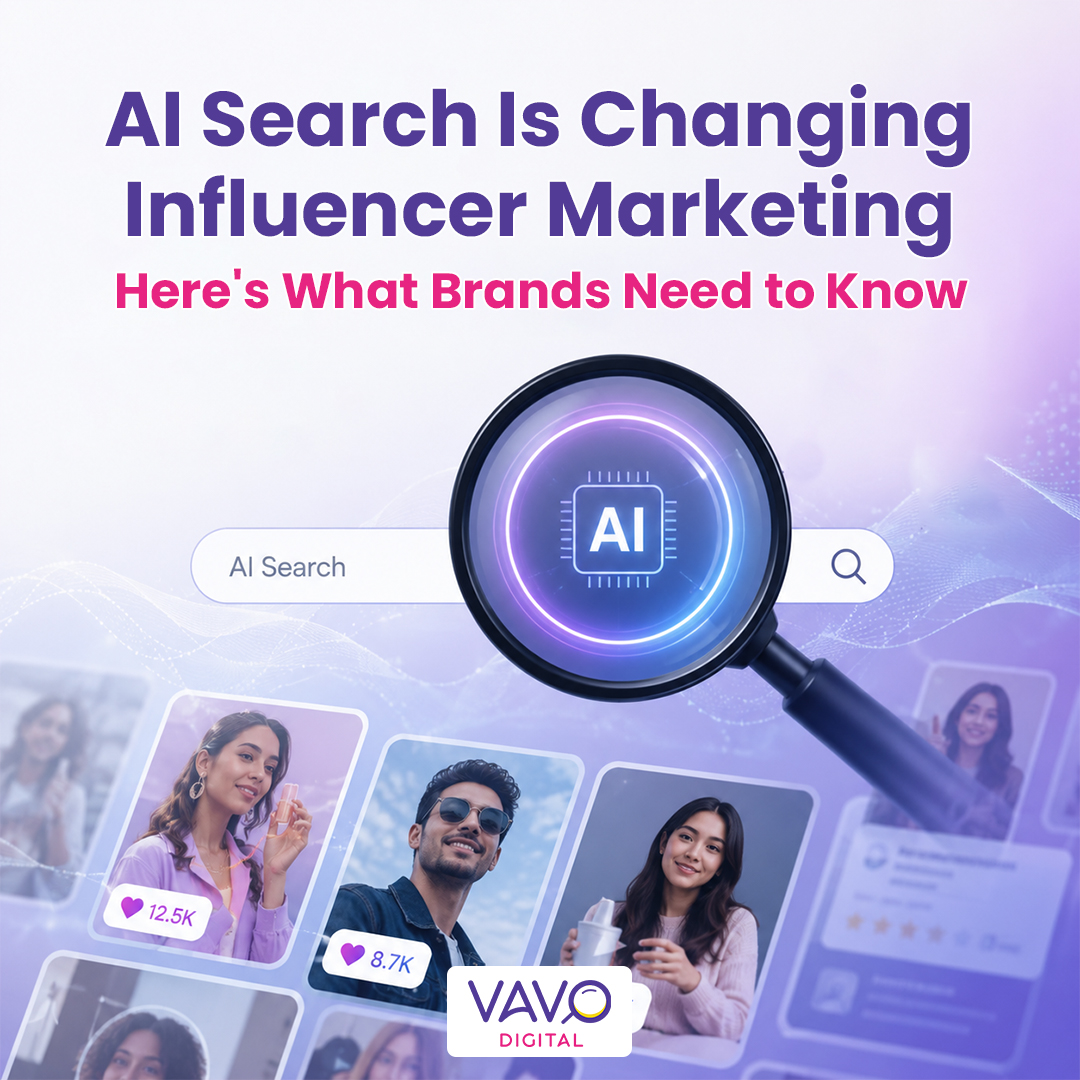
AI Search Is Changing Influencer Marketing: Here’s What Brands Need to Know
Here's something that should make every brand marketer sit up straight.
Open ChatGPT or Perplexity right now. Type in a question your customer would ask: "Best skincare brand for oily skin in India" or "Which fintech app is best for investing in 2026." Look at the answer. Now look at what it cites.
Chances are, it's not your website. It's a creator's review. A YouTube video. A Reddit thread. A newsletter from someone your customer already trusts. This is all AI search.
That's AEO, Answer Engine Optimization, and it's quietly becoming the most important shift happening in influencer marketing right now.
Gartner projects traditional search volume could drop 25% by the end of 2026. 37% of active AI users now start their searches in generative engines rather than in a search bar.
The brands that understand what this means for creator strategy are already pulling ahead. The ones that don't are about to find out the hard way.
AI platforms don't return ten blue links. They synthesise one response and cite a small set of trusted sources. Visibility now depends on whether credible voices are saying credible things about you in the places AI reads.
And here's the part that changes everything for influencer marketing. AI engines lean heavily on creator content, especially video, to decide which brands are credible enough to cite. YouTube has overtaken Reddit as one of the strongest social signals feeding AI search authority. LinkedIn content now outranks company websites in AI answers to B2B questions.
Which means the creator content you're producing, or not producing, is now directly shaping whether AI recommends your brand to a buyer who never even visits your website.
What Is AEO and Why Does It Matter?
For two decades, being found online meant ranking on Google. You optimised your website, built backlinks, targeted keywords. That's SEO. It still matters. But it's not the whole game anymore. Here's the key difference:| Metrics | SEO | AEO |
| Goal | Rank in search results | Get cited in AI-generated answers |
| Measured by | Rankings, clicks, traffic | Mentions, citations in AI answers |
| Platforms | Google, Bing | ChatGPT, Perplexity, Google AI Overviews |
| Content that wins | Keyword-optimised pages | Specific, trusted, human-first content |
| Who AI trusts most | High-authority websites | Creators, YouTube videos, community content |
Why This Changes the Influencer Brief
Most influencer briefs in India are still written around one goal: reach. How many people will see this post? How many views will this Reel get? Those metrics aren't wrong. But they're incomplete. For example, 42% of CRM software buyers now use AI search as part of their evaluation process. And clicks from answer engines convert at significantly higher rates because visitors have already learned about products and compared alternatives before clicking through When a creator makes a detailed, authentic video about your product, they're not just building awareness for the people who watch it right now. They're building an AI search authority that will surface your brand in answers to buying-intent queries for months, potentially years, to come. Here's what brands need to start asking in every brief: 1. Is the content specific enough to be cited? AI engines don't cite vague endorsements. They cite specific claims, detailed explanations, and genuine first-person experience. "This foundation blends really well and lasts 8 hours on my oily skin": citable. "This product is amazing": not citable. Your brief needs to encourage depth, not just positivity. 2. Is the creator on the right platform? YouTube is currently the strongest social signal for AI search citation. Long-form reviews and honest tutorials carry significantly more AI search weight than a 15-second Reel. If your entire creator budget is going into short-form content, you're building reach without building authority. 3. Is the creator trusted enough? AI has not devalued creators. It has devalued everything easy to fake. A nano creator with 20K subscribers who consistently publishes deep, credible reviews can carry more AI search authority than a macro creator with 2 million followers who posts everything from phones to snacks. Trust and consistency are what AI engines weigh. Follower count is not the metric here.The India-Specific Angle Brands Are Missing
India's consumer journey is increasingly starting with AI. A first-time buyer researching:- Which mutual fund app to use
- Which laptop to buy under ₹60,000
- Which skincare routine to start
- Which EdTech platform to join
What to Do Right Now: A Practical Checklist
| Action | Why It Matters |
| Run an AI audit of your brand | Open ChatGPT and Perplexity. Ask what your customer would ask. See who gets cited and who doesn't. That's your AEO gap. |
| Shift budget toward long-form YouTube content | YouTube is the most heavily weighted platform for AI search citations right now. |
| Brief for depth, not just reach | Specific, honest, first-person content gets cited. Generic endorsements don't. |
| Build always-on creator relationships | A creator who covers your brand across 4 videos over 6 months builds real AI search authority. A one-off post doesn't. |
| Prioritise creators with niche authority | Deep trust in a specific category matters more than broad reach across everything. |
The Bottom Line
SEO took two decades to become standard practice in marketing. AEO is moving faster than that. The brands that start treating creator content as a search authority asset, not just a reach vehicle, are the ones that will show up when a buyer asks an AI which brand to choose. The question is no longer just how many people will see a post. It's whether that post shapes what an AI says about you when a buyer asks. If you're building an influencer strategy for 2026 and beyond, let's talk about how Vavo Digital can help you build creator programs that drive both reach and AI search authority.FAQs
- What is AEO in influencer marketing? AEO stands for Answer Engine Optimization. It means structuring creator content so AI platforms like ChatGPT and Perplexity cite it when answering buyer questions. A detailed, honest creator review can show up in AI-generated answers your customers are reading right now.
- How is AEO different from SEO? SEO gets your website ranking on Google. AEO gets your brand cited inside AI-generated answers. AI engines return one synthesised answer with a handful of sources, not ten links. If you're not in those sources, a growing chunk of buyers never sees you.
- Which platforms matter most for AEO? YouTube is the strongest signal right now, followed by Reddit, LinkedIn, and long-form blogs. Instagram Reels and short-form content carry very little AI search authority. If your entire budget is going into short-form, you're building reach without building authority.
- Does follower count matter for AEO? Less than you'd think. AI engines weight trust and specificity over reach. A nano creator with 20K subscribers publishing deep, credible niche reviews can carry more AI search authority than a macro creator with 2 million followers covering everything.
- How do I check if my brand shows up in AI search? Open ChatGPT, Perplexity, and Google AI Overviews. Ask what your customers would ask about your category. See who gets cited. That's your AEO audit.
- How does this change how brands should work with influencers? It changes the brief. Brief for depth, not just reach. Long-term creator partnerships matter more than one-off posts because repeated, authentic coverage builds the AI search footprint a single sponsored post cannot.