September 23, 2026
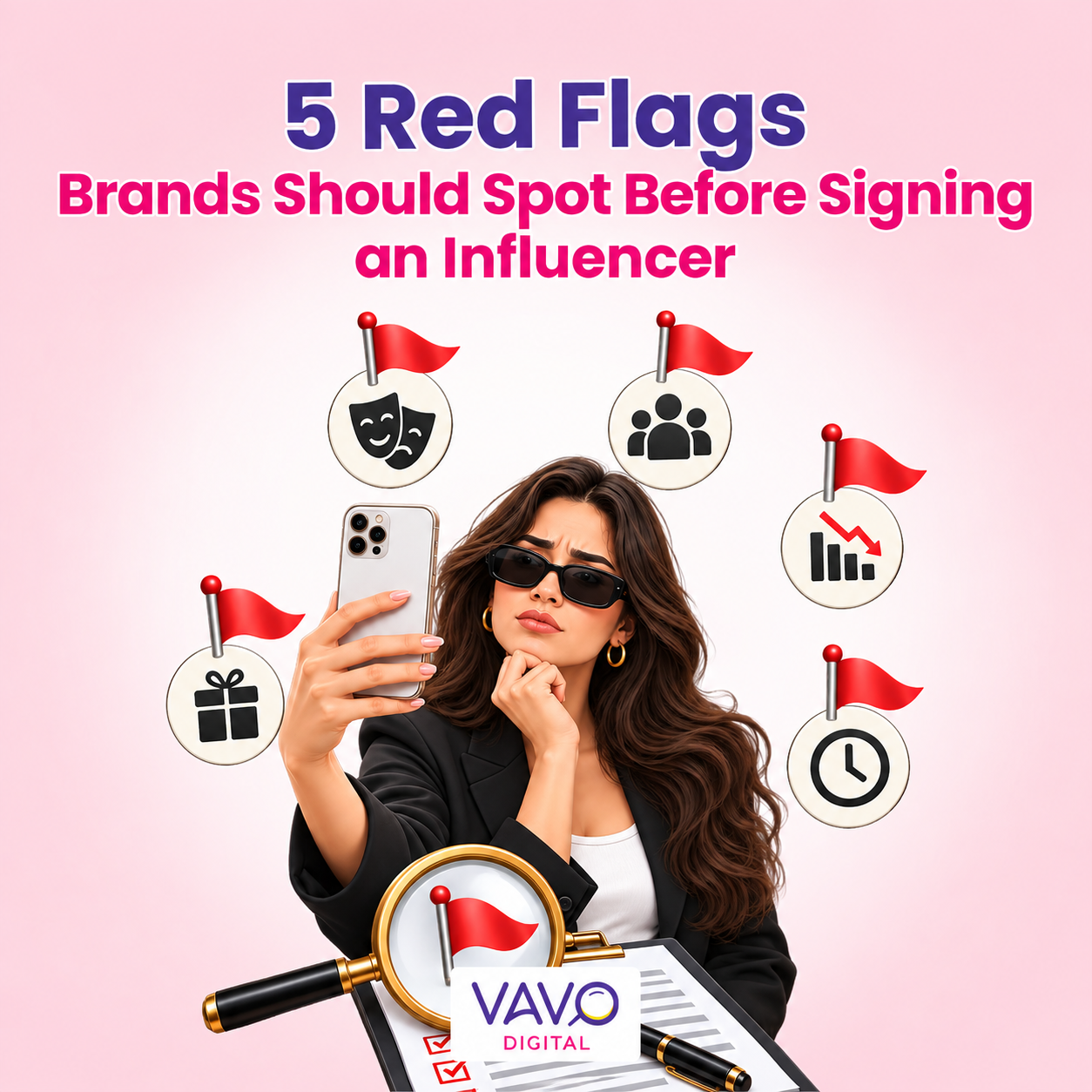
5 Red Flags Brands Should Spot Before Signing an Influencer
A brand finds a creator with a good follower count, a decent engagement rate, and content that fits the brand. The deal gets signed fast. Then the campaign goes live, and the results don't match what the numbers promised.
This happens more often than most brands realise, and it's rarely bad luck. It's usually a red flag that was visible before signing, just not checked.
Here are five red flags to pay attention to before you commit a single rupee.
1. Follower count that doesn't match engagement
A large follower count doesn't always mean a creator has an equally active audience. If a creator has 100,000 followers but consistently gets only a few thousand views and very few likes or comments, it's worth looking closer. What to do: Compare the creator's follower count with their recent post views, likes, and comments. You can also ask the creator to share recent Story Insights screenshots to check Story views and engagement. Look at multiple posts and recent Story data rather than judging the creator based on one underperforming post.2. Comments that all sound the same
Real people leave messy, specific comments. They ask questions. They disagree. They mention things unrelated to the post. Fake engagement doesn't do this well. If dozens of comments on a post say some version of "amazing," "so good," or a fire emoji, and nothing else, that's a sign of bot activity or a comment pod, a group of accounts that comment on each other's posts to fake engagement. This gets worse when the comments don't even match the post. A string of "so cute!!" under a serious post about a financial product, for example, doesn't reflect genuine reaction. It reflects a bot script running on autopilot. What to do: Actually read the comments, not just the count. Click into a few commenter profiles. If many of them have no photo, no posts, and follow thousands of random accounts, that's not a real audience.3. An audience that doesn't match the content
A creator's followers should generally reflect who the creator is talking to. A skincare creator based in Mumbai should have an audience that's mostly women, mostly Indian, mostly interested in beauty and personal care. When the numbers don't match that, something's off. A "parenting" creator with an audience that's 70% male. A creator claiming a Delhi-based audience where analytics show most followers coming from unrelated countries with no cultural connection to the content. These mismatches usually mean the followers were bought in bulk rather than built organically. What to do: Ask for basic first-party audience data before signing: age, gender, and location breakdown. If a creator hesitates or refuses to share this, treat that refusal itself as a red flag.4. Stories or videos with almost no engagement
Before locking in a creator, ask for the Story insights from their most recent brand collaboration. This gives you a clearer picture of how many people are actually viewing and engaging with their sponsored content, rather than relying only on feed performance. A creator's main feed might show a healthy number of likes and comments, while their Stories get significantly fewer views. That gap can be a sign that the follower count isn't translating into an active audience. What to do: Ask the creator to share recent Story insights, including views, reach, and engagement, ideally from a previous brand collaboration. Compare those numbers with their follower count and overall feed performance. A consistent gap across multiple campaigns is worth asking about before you sign.5. No verifiable history with real brands
A creator with genuinely good numbers should have some track record. Past brand partnerships, tagged posts, campaigns you can actually find and check. If a creator claims a large following and strong rates but has little to no visible history of working with real, established brands, that's worth a second look. This also applies to rate cards that don't make sense. A creator charging a low, standard rate one week and an unusually high rate the next, with no clear reason for the jump, suggests the pricing isn't based on anything consistent. Vague or confidential rates, when every other legitimate creator in the same tier is roughly transparent, is its own small warning sign. What to do: Search for past campaigns the creator claims to have run. Check the brand's own social channels or website for confirmation. A short, honest answer like "this is one of my first paid partnerships" is fine. A vague or evasive answer about past work is not.Why this matters more than it used to
Vetting influencers isn't a one-time check before signing. It matters throughout the entire relationship, especially during a campaign, since fraud patterns can appear mid-campaign too, not just before it. A creator who looked clean during vetting might show a sudden follower spike right in the middle of your campaign, timed specifically to impress you before a renewal conversation. Watching for these patterns doesn't stop after the contract is signed. This is especially important for brands moving toward longer-term creator relationships rather than one-off posts. A red flag that costs you one wasted campaign is a contained problem. The same red flag, unnoticed, sitting inside a six-month retainer, is a much more expensive one. In fact, skipping this vetting step is one of the more common reasons influencer campaigns fail to convert in the first place, long before the brief or the creative even comes into question.A simple pre-signing checklist
Before finalising any influencer deal, run through these five checks:- Does the creator's engagement and view performance make sense for their follower count?
- Do the comments look specific and varied, or generic and repetitive?
- Does the audience demographic data match who the content is actually for?
- Does Stories or video engagement roughly track with the follower count?
- Can you find real, verifiable past brand partnerships?
The bottom line
None of these five checks require expensive tools or a legal team. They require actually looking at the data instead of trusting the headline follower count. Most influencer fraud isn't sophisticated. It's visible if someone takes fifteen minutes to check before signing instead of after the campaign underperforms. If you want help building a proper vetting process into how your brand selects creators, let's talk.FAQs
- What's the biggest red flag when vetting an influencer? Unexplained follower spikes are usually the clearest sign. A sudden jump of thousands of followers with no matching viral moment, media coverage, or algorithm feature almost always points to bought followers rather than organic growth.
- How can brands tell if an influencer's comments are fake? Real comments are varied and specific. Fake or bot-driven comments tend to repeat the same generic phrases, like "amazing" or a fire emoji, across many different posts, and often come from accounts with no profile photo or posting history.
- Why do Stories views matter for vetting an influencer? Stories require active viewing in real time, making them much harder to fake than feed likes. A large gap between high feed engagement and very low Stories views usually means a meaningful chunk of a creator's followers aren't real or aren't actually paying attention.
- Should brands ask influencers for their audience data before signing? Yes. Basic first-party data on audience age, gender, and location helps confirm whether a creator's followers actually match the content and the brand's target buyer. A creator who refuses to share this data is a red flag on its own.
- Does vetting stop once a contract is signed? No. Fraud can appear mid-campaign too, sometimes timed deliberately to impress a brand ahead of a renewal decision. Brands should keep monitoring engagement patterns and follower growth throughout an ongoing relationship, not just before the first deal.