July 18, 2026
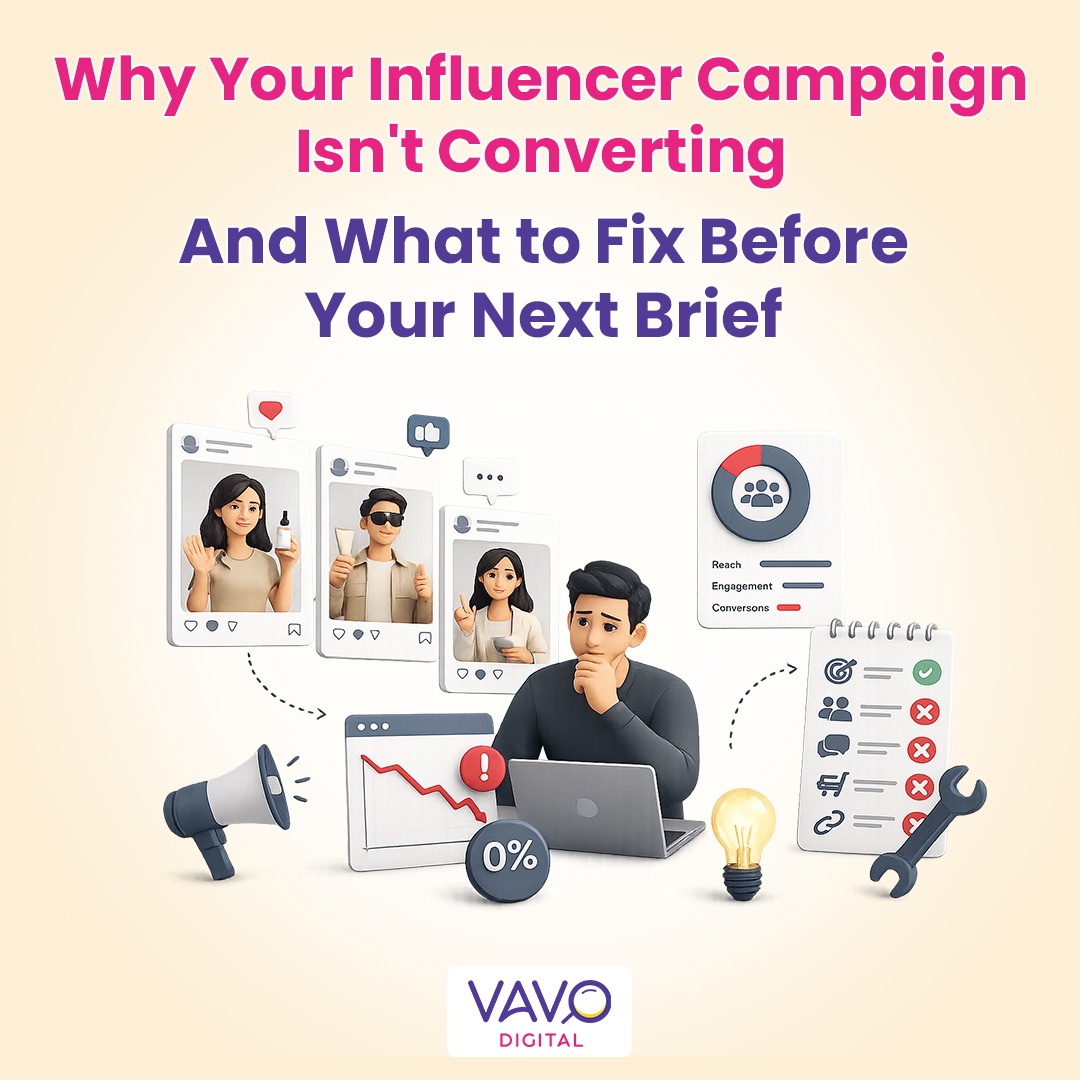
Why Your Influencer Campaign Isn’t Converting, And What to Fix Before Your Next Brief
Let's be honest about something.
Most brands that say "influencer marketing doesn't work" have actually run influencer campaign wrong. The campaign went live, the views came in, and then nothing happened. No spike in sales. No uptick in website traffic. No DMs asking where to buy.
And the default response is to blame the creator.
But here's what we've seen after running hundreds of campaigns at Vavo Digital: the creator is rarely the problem. The brief is. The selection process is. The measurement framework is. The campaign structure is.
The gap is not between influencer marketing and results. It is between how influence works in practice and how it is still being operationalised. In most cases, the channel is not underperforming. The approach is.
Bigger isn't always better. A micro creator with a highly engaged niche audience will almost always outperform a mega creator on conversion.
Different creators in the same campaign can have different goals. A macro creator drives awareness while a micro creator drives conversion. Measure them differently.
Here's what's actually going wrong and exactly what to fix before your next influencer campaign goes out:
Problem 1: You Picked the Creator for Their Follower Count, Not Their Audience
This is the most common and most expensive mistake. A creator with 2 million followers sounds impressive in a campaign deck. But if only 3% of those followers are in your target demographic, you've just paid a premium to reach the wrong people. One campaign we reviewed didn't perform as expected because the team had relied on follower count alone to vet partners. The content didn't resonate with their followers and the campaign results fell short of goals. Before selecting any creator, ask:- What percentage of their audience matches your target buyer's age, gender, location, and interest profile?
- Has this creator's audience actually bought products they've recommended before?
- Does this creator post about your category regularly, or is this a one-off for them?
| Creator Tier | Followers | Average Engagement Rate |
| Nano | 1K to 10K | 2.19% |
| Micro | 10K to 100K | 1.5% to 2.75% |
| Macro | 100K to 1M | 1% to 1.5% |
| Mega | 1M+ | 0.8% to 1% |
Problem 2: Your Brief Left No Room for the Creator's Voice
Brands that over-script influencer content are essentially paying for an ad that wears a creator's face. Audiences have learned to spot it immediately and scroll past it just as fast. The fix is to separate non-negotiables from preferences in your brief. Non-negotiables (things the creator must include): product name, key claim, disclosure, link or code. Preferences (things you'd like but aren't mandatory): tone, visual style, specific use case shown. Everything else should be left to the creator. If you've chosen them correctly, their audience trusts them precisely because they don't sound like an advertisement. When you collaborate rather than dictate, they build credibility.Problem 3: You Set No KPIs Before the Campaign Went Live
This one is more common than most brands will admit. The campaign launches, and then someone asks, "How do we know if this worked?" and there's no good answer. Define success before the brief goes out, not after the content goes live.| Campaign Goal | Primary KPI | Secondary KPI |
| Brand awareness | Reach, video views | Share of voice, brand mentions |
| Consideration | Saves, profile visits | Website sessions from creator link |
| Conversion | Orders via code/link, CAC | Revenue per creator, AOV lift |
| Community building | Comments, DMs | Follower growth from creator content |
Problem 4: You Ran a One-Off Campaign and Expected Long-Term Results
A single sponsored post is not a campaign. It's an ad. And like most ads, its impact fades within days. The brands consistently seeing strong influencer ROI in India are the ones running always-on creator programs, not one-off campaign spikes. When a creator mentions your brand across multiple pieces of content over three to six months, their audience starts to associate you with someone they trust. That association is what drives purchase decisions, and it simply cannot be built in a single post. Restructure at least part of your influencer budget toward long-term creator partnerships. Even one or two creators on a six-month retainer will outperform ten creators on a one-off brief every time.Problem 5: You Didn't Amplify the Content After It Went Live
Most brands treat the publish date as the end of the campaign. The creator posts, the views come in, and then the content is left to fade organically. This is leaving significant value on the table. Creator content that has already performed well organically is your most credible advertising asset. It has social proof built in: real comments, real reactions, real shares. Boosting that content as a paid ad through Meta's partnership ad tools takes something that already works and puts it in front of a much larger audience. Over 60% of brands now track influencer campaigns against sales or conversions, not just reach or engagement. The ones seeing the best numbers are almost always the ones amplifying high-performing creator content with paid spend after the organic window closes. Build a paid amplification budget into every influencer campaign from day one. Identify the top-performing post within 48 hours of going live and boost it immediately.Problem 6: You Measured Views and Called It a Day
Views are the easiest metric to report. They're also often the least meaningful one. Look beyond surface metrics at signals of genuine purchase intent. The Malabar Gold and Diamonds campaign we ran at Vavo Digital is a good example. The metric that mattered wasn't view count. It was comment quality. When an audience starts asking "where is the store?" and "what is the price of this piece?" in the comments section, that's a conversion signal no view count can capture. Train your team to read qualitative signals alongside quantitative ones. Comments, saves, DMs, and brand search volume during campaign periods are all meaningful data points most brands ignore.The Bottom Line
Influencer marketing in India is a ₹3,375 crore industry growing at 18% CAGR. The brands that aren't seeing results aren't operating in a broken channel. They're operating with a broken brief. Fix the selection process. Trust the creator. Set the KPIs upfront. Build for the long term. Amplify what works. And measure what actually matters. If you want a campaign built to actually convert, let's talk.FAQs
- Why is my influencer campaign getting views but no sales?
- How do I choose the right influencer for conversions?
- What KPIs should I set for an influencer campaign?
- Should I give influencers creative freedom?
- How long should an influencer campaign run?
- How do I amplify influencer content after it goes live?