November 13, 2026
Wedding Season Influencer Marketing: Which Creator Categories Should Brands Consider?
Last wedding season, CAIT estimated 46 lakh weddings across India in just 45 days, worth ₹6.5 lakh crore. The default brief for all that demand is still a bride in a lehenga.
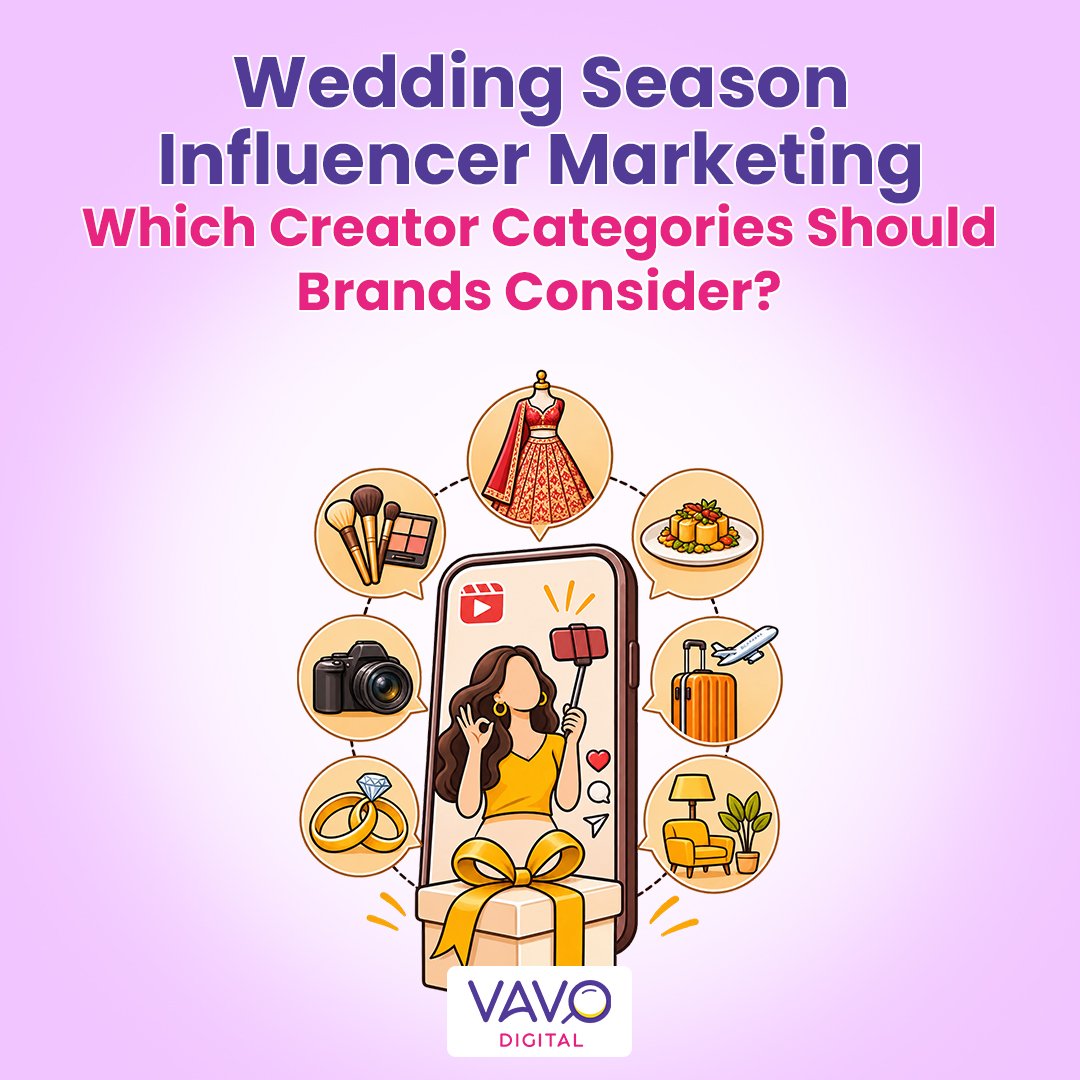
Bridal creators are an important part of wedding season campaigns, but they don't represent everyone spending during this period. Families are shopping for jewellery, couples are booking wedding venues, guests are looking for outfits, and people are buying gifts for the celebrations. Each of these groups has different needs and buying decisions. This gives brands several creator categories to work with, beyond bridal influencers.
Here's which creator categories belong in a wedding season plan, which ones brands tend to overlook, and how to match them to what you actually sell.
Most brands begin with the first row and stop. Four of the rows further down are where we'd look next.
Why does wedding season need more than one creator category?
Because the money doesn't sit in one place. According to CAIT's study across 75 cities, last season's weddings came in slightly under the previous year's 48 lakh, yet business grew from ₹5.9 lakh crore to ₹6.5 lakh crore. Fewer weddings, bigger spend per wedding. That spend spreads thin across categories. CAIT's estimate puts jewellery as the largest contributor at 15%, with apparel and sarees at 10%, and the rest scattered across venues, decor, catering, travel and gifting. The same study expects the season to create over a crore of temporary and part-time jobs for decorators, caterers, florists and others. When a wedding pulls from that many industries, a campaign built around a single creator type reaches only one of them.Which creator categories should brands consider?
Start with this map, then work out where your product shows up in a wedding.| Creator category | What they bring | Best for brands selling |
| Bridal and wedding-planning creators | Planning vlogs, checklists, bridal looks, vendor reviews | Venues, planners, bridal wear, photography |
| Fashion and ethnic-wear creators | Wedding outfit inspiration, occasion wear styling, trend-led looks and fashion tips | Ethnic wear, footwear, accessories, tailoring |
| Beauty and skincare creators | Pre-wedding skincare routines, bridal and guest makeup | Skincare, makeup, haircare, salons |
| Jewellery and accessories creators | Styling pieces with outfits, how to choose for a look | Jewellers, watches, bags, fragrances |
| Food, home and gifting creators | Sweets, hampers, decor ideas, return gift ideas | Gifting brands, home decor, food and beverage |
| Travel and destination wedding creators | Venues, itineraries, honeymoon planning | Hotels, resorts, travel platforms |
| Personal finance creators | Wedding budgeting, gold buying, loans | Banks, NBFCs, investment platforms |
| Regional and Tier 2 and 3 creators | Local-language content, community trust | Any brand that wants reach beyond the metros |
Jewellery and accessories creators
Jewellery is the biggest line item in CAIT's estimate, and it's also a category where creator content shows intent clearly. In our Malabar Gold & Diamonds Akshaya Tritiya campaign, the signal that mattered wasn't views. It was the comments, with people asking where the store was and what a particular piece cost. A creator styling a necklace with an outfit invites exactly that kind of question.Travel and destination wedding creators
Destination weddings are getting a push of their own. The government's Wed in India campaign is aimed at bringing back an estimated ₹1 lakh crore Indians spend on weddings overseas, and CAIT notes a rise in luxury and destination weddings in Rajasthan and Gujarat. For hotels, resorts and travel platforms, a creator who documents a venue walkthrough or a honeymoon itinerary reaches couples while they're still deciding.Regional and Tier 2 and 3 creators
Delhi alone is expected to account for ₹1.8 lakh crore of last season's trade, a little over a quarter of the national figure, but that still leaves most of the money elsewhere. Regional creators bring local language, local customs and local trust. A haldi or sangeet outfit looks different in Jaipur than it does in Chennai, and a creator from the same region knows the difference.Personal finance creators
A wedding is also a budgeting exercise. Gold purchases, loans, and savings plans come up in nearly every family conversation about one. If you sell financial products, a finance creator explaining how to plan a wedding budget is in the right room at the right time.Which creator tier works best for wedding campaigns?
It depends on the job. Macro creators help a wedding collection or a venue get noticed quickly. Micro creators carry more weight when someone is comparing options, such as a skincare routine for the weeks before the wedding or a jeweller for the trousseau. Nano creators, often posting about their own cousin's or friend's wedding, feel closest to the guest who's trying to figure out what to wear. Our Influencer Tier Comparison breaks down what each tier is good for.How do you choose the right categories for your brand?
A few questions narrow it down quickly:- Where does your product show up in a wedding: the preparation, the ceremony, the guest list, or the honeymoon?
- Which one category should anchor the campaign, and which two can support it? Eight categories at once spreads a budget too thin.
- How far ahead do your buyers decide? Outfits, bookings, and gifts are usually planned well before the date, so creators need briefs weeks early. Auspicious dates change every year, so work back from this year's first one.
- What happens to the content after the season? A "wedding guest outfit ideas this December" Reel is seasonal. A "how to plan a wedding budget" video keeps working long after, which is the seasonal and evergreen split worth planning for.
The bottom line
Wedding season is the biggest buying moment in India's calendar, and it's spread across industries. A single bridal creator covers one slice of it. A planned mix of creator categories, matched to where your product appears in the wedding, covers far more. Pick an anchor category, add a couple of supporting ones, brief early, and make some of the content something people can still use in February. Planning a wedding season campaign? At Vavo Digital, we help brands choose creators, build briefs and plan content across categories and regions. Let's talk about your next campaign.FAQs
- Which creators work best for wedding season campaigns?
- Should brands only work with bridal creators?
- When should brands start planning wedding season influencer campaigns?
- Do micro creators work for wedding campaigns?
- Can wedding season content keep working after the season ends?