September 21, 2026
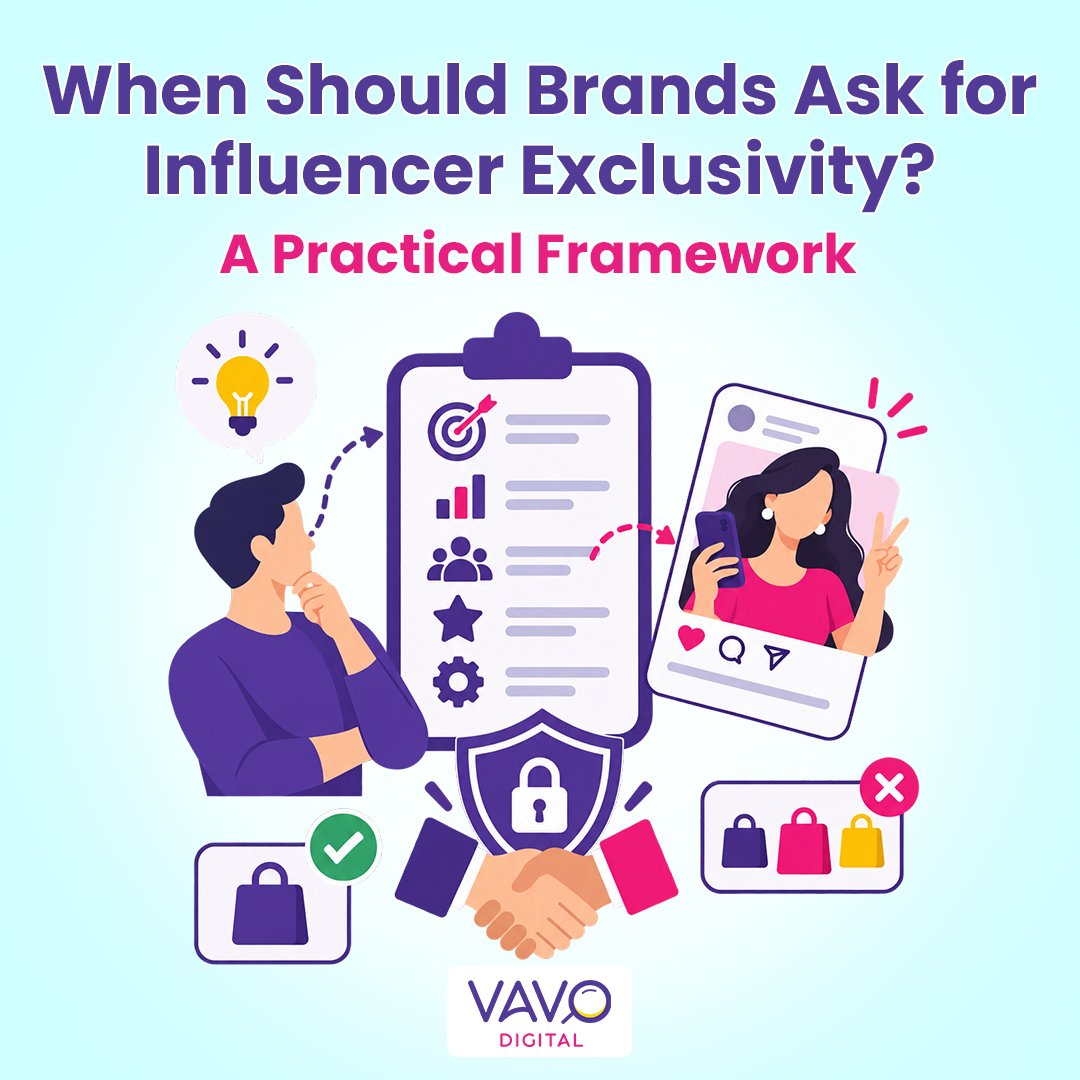
When Should Brands Ask for Influencer Exclusivity? A Practical Framework
Every brand planning an influencer campaign eventually hits the same question: should this creator work with us exclusively? There's no simple answer, and most brands get stuck here. Ask for too little protection and a competitor signs the same creator next month. Ask for too much, and the campaign feels forced, the creator's content stops feeling real, and their audience notices.
This is one of the most common sticking points in an influencer contract, and one of the least understood. Brands often default to asking for exclusivity because it feels safer, without actually working through what they're protecting, for how long, or what it's going to cost them if they get the scope wrong.
Here's a practical framework for figuring out when influencer exclusivity actually protects a brand, and when it quietly works against it.
The pattern here is simple. The bigger and longer the restriction, the higher the price should be, and the more the relationship should look like an actual ongoing partnership rather than a single transaction.
What exclusivity means
An exclusivity clause is simple in concept. The creator agrees not to promote competing brands or products for a set period of time. That's it. But there are a few different ways to scope this, and the difference matters a lot in practice. Category exclusivity means the creator can't work with any brand in a defined category, like skincare or fitness equipment, for the length of the deal. This is the most common form. Platform exclusivity means the creator can only post about a specific product on certain platforms, but stays free to work with other brands elsewhere. Full exclusivity means the creator can't take any brand deals at all, in any category, for the duration. This is rare and expensive, usually reserved for celebrity ambassador deals. Most brands, without realising it, ask for something closer to full exclusivity when category exclusivity would have done the job just as well.When exclusivity genuinely protects a brand
There are real situations where exclusivity earns its place.- When the creator is your face for a launch: If you're paying a creator to be the primary voice of a new product, having them post about a direct competitor a week later undermines everything the campaign was trying to build. This is a fair and reasonable use of exclusivity.
- When the category is genuinely narrow and specific: If your product is a niche one, say, a specific type of outdoor gear, it makes sense to ask for exclusivity in that exact category for the full length of the relationship. The reasoning is straightforward: without it, the creator's audience starts to smell "just another promotion" instead of a genuine recommendation, and that hurts both sides.
- When you're paying for a long-term ambassador relationship, not a single post: Influencer exclusivity makes far more sense as part of a six-month or one-year ambassador deal than as a blanket requirement on a single sponsored post. The longer the relationship, the more the exclusivity is actually protecting something real: a consistent, trusted voice speaking for your brand over time.
- When it's actually paid for: Influencer exclusivity restricts a creator's other income. A fair deal compensates for that restriction. Standard pricing in the industry adds anywhere from 20% to 100% or more on top of the base rate, depending on how long and how broad the exclusivity is. A brand asking for exclusivity without paying extra for it is asking the creator to absorb a real cost for free.
When exclusivity kills authenticity instead
- When it's requested by default, without a real reason: The most common mistake brands make is treating exclusivity like a standard checkbox on every contract, rather than something to request only when there's a genuine business reason for it. If your brand isn't paying for a full ambassador relationship and doesn't have a specific launch moment to protect, blanket exclusivity is usually solving a problem that doesn't exist.
- When the creator has an established, authentic history with a competitor: Asking a creator to suddenly drop a brand they've been genuinely recommending for years, just because you signed them, damages both the creator's credibility and your own brand's trust signal. Audiences notice when a creator's opinions change the moment money changes hands, and that noticing works against the brand that asked for it.
- When the scope is written too broadly: A clause that names specific competitor brands, rather than a category, breaks the moment a new competitor enters the market that wasn't on the original list. A clause that says "no competing project-management software" ages far better than one that lists three specific competitor names, because the second one becomes outdated as soon as a fourth competitor shows up.
- When the price doesn't match the restriction: If a brand asks for a full year of category exclusivity but only pays the same rate as a single sponsored post, that mismatch tells a creator the brand hasn't actually thought about what it's asking for. This isn't just unfair. It signals a level of inexperience that makes creators less likely to want to work with the brand again.
- When it's applied to a one-off post that never needed it: For a single sponsored post with no long-term relationship attached, a light 30-day category exclusivity is usually enough. Anything broader than that, for a one-time collaboration, is rarely worth the extra cost or the restriction it places on the creator.
How influencer exclusivity should be priced, based on the relationship
| Deal type | Typical exclusivity scope | Typical duration | Typical price premium |
| One-off sponsored post | Category only, narrow | 30 to 90 days | 20% to 55% above base rate |
| Short campaign (2 to 4 posts) | Category or platform | 60 to 90 days | Percentage of total campaign fee |
| Brand ambassador (6 months) | Full category, sometimes platform | Contract term plus a short buffer after | Built into the monthly retainer |
| Celebrity ambassador (12+ months) | Full category or broader | Full term plus post-term buffer | Negotiated as its own line item |
A simple test before you ask for exclusivity
Before adding an influencer exclusivity clause to a contract, it's worth asking three plain questions.- Is there a real, specific reason for this, tied to a launch or a genuine ambassador relationship, rather than a default habit?
- Have I scoped it to a category, not a brand list, so it doesn't age badly the moment a new competitor shows up?
- Am I paying enough extra to fairly compensate the creator for what they're giving up, and does that price match how long and how broad the restriction actually is?
Why this connects to how long-term creator relationships actually work
Exclusivity works best as part of a genuine long-term creator partnership, not as a blanket rule applied to every deal a brand signs. A creator who is genuinely, consistently working with one brand over many months builds a kind of trust with their audience that a single exclusive post never can. That's the real value exclusivity is meant to protect. It only works when the relationship actually earns it.The bottom line
Exclusivity isn't good or bad on its own. It's a tool that fits certain situations and badly fits others. The brands that get this right ask for exclusivity only when there's a real reason for it, scope it narrowly enough to stay fair, and pay creators properly for the restriction they're accepting. The brands that get it wrong treat exclusivity as a default, apply it too broadly, and end up with content that feels less real, from a creator who feels less valued. If you want help figuring out when exclusivity actually makes sense for your next creator deal, let's talk.FAQs
- What is category exclusivity in an influencer contract? Category exclusivity means a creator agrees not to work with any brand in a specific product category, like skincare or fitness equipment, for a set period of time. It's the most common and generally the fairest form of exclusivity for both sides.
- How much extra should a brand pay for exclusivity? It depends on scope and duration. A short, 30-day category exclusivity on a single post typically adds 20% to 35% above the base rate. A full 12-month ambassador-level exclusivity can add 100% to 150% or more, since it restricts a much larger portion of the creator's potential income.
- When does exclusivity hurt a brand instead of helping it? When it's requested without a real reason, applied too broadly, or forces a creator to drop an authentic, long-standing relationship with another brand. In these cases, audiences often notice the shift, and it can hurt trust in both the creator and the brand asking for exclusivity.
- Should exclusivity clauses name specific competitor brands or a category? A category, not a list of specific brand names. Naming specific competitors means the clause becomes outdated the moment a new competitor enters the market. Scoping to a category, like "no competing project management software," holds up far longer.
- Is exclusivity worth it for a single one-off sponsored post? Usually not beyond a light, 30-day category restriction. Full or long-term exclusivity makes much more sense for an ongoing ambassador relationship than for a single post, where the extra cost and restriction rarely match the value the brand actually gets from it.