August 5, 2026
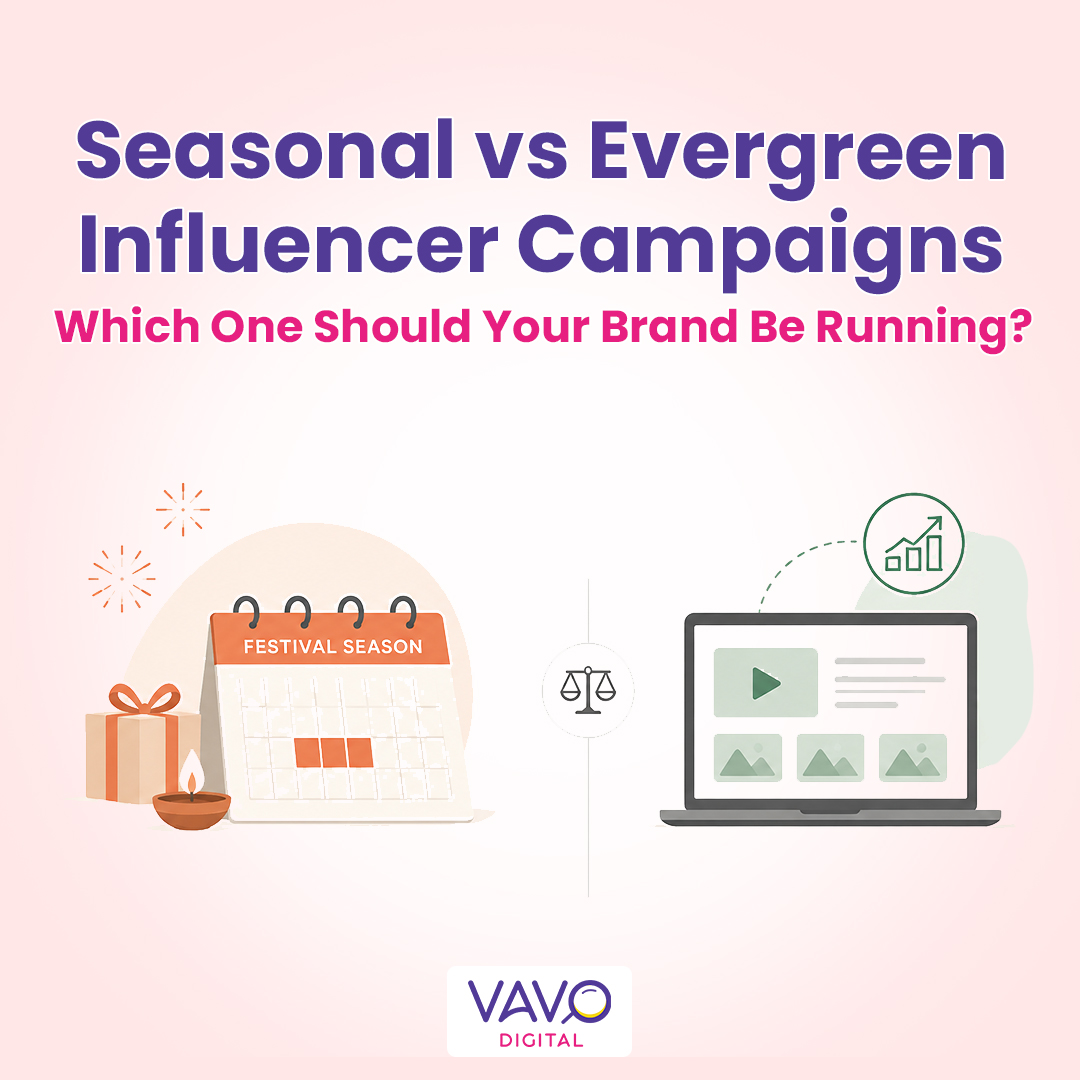
Seasonal vs Evergreen Influencer Campaigns: Which One Should Your Brand Be Running?
Most brands spend 80% of their influencer budget on campaigns that stop delivering the moment the season ends. That's not a criticism; it's just math. A Diwali collaboration has a shelf life of maybe three weeks. A well-placed evergreen review can pull search traffic for three years.
Neither approach is wrong. But most brands pick one by default instead of by design, and that default is almost always seasonal, because seasonal is what agencies pitch and what marketing calendars remind you to plan for. Evergreen doesn't have a festival to hang itself on, so it gets skipped, and the traffic it would have compounded goes to a competitor instead.
Here's what actually separates the two, what the ROI looks like for each, and how brands running influencer marketing in India are starting to stop choosing one and start layering both.
For a 30-day sales lift, seasonal usually wins. The intent is already there; you're just capturing it. For cost per acquisition over 12 months, evergreen tends to win; a seasonal campaign has to be paid for again next year, same creators, similar briefs, resetting the clock, while an evergreen video that still ranks keeps generating clicks without a second spend.
The mistake brands make is comparing a seasonal campaign's week-one numbers against an evergreen campaign's week-one numbers. That's not a fair fight. Evergreen isn't supposed to spike in week one; it's supposed to still be working in month eighteen.
What Seasonal Campaigns Actually Do Well
Seasonal campaigns are tied to a calendar moment: Diwali, wedding season, IPL, back-to-school, Valentine's Day, end-of-season sales. The content is built around that moment and loses relevance once it passes. The strength here is intent. During Diwali, festive gifting intent in India spikes hard, and a well-timed unboxing or gifting-guide reel rides that wave instead of trying to create it from nothing. Fashion, beauty, F&B, and jewellery brands lean on seasonal drops because purchase behaviour in these categories is genuinely cyclical. The catch is that everyone else is doing it too. Creator rates climb in the two months before Diwali. Feed real estate gets crowded. And the content has an expiry date built in: once the festival passes, a reel about "Diwali gifting under ₹999" stops working for search or discovery, and the budget behind it has to be spent again from scratch next year.Where Evergreen Content Quietly Wins
Evergreen content is built around a need that doesn't expire: how to use a product, a comparison video, a routine, a "day in the life," a problem-solution format. It's not tied to a date, so it keeps earning views, saves, and search traffic long after publish day. A skincare brand's "how to layer actives without irritation" video from a dermat creator can keep converting a year later, especially if it ranks on YouTube or shows up in an AI search summary when someone asks a related question. That's the compounding effect we saw play out with the Malabar Gold & Diamonds Akshaya Tritiya campaign at Vavo Digital; content built around a real, recurring buying question kept working well past the campaign window. Seasonal content resets to zero every year. Evergreen content keeps a base level of traffic running in the background, and every new piece adds to that base instead of replacing it. The tradeoff is patience; evergreen rarely spikes, and if a brand is judging success off a 30-day report, it can look unimpressive next to a seasonal campaign's obvious bump.The ROI Comparison Nobody's Measuring Right
Depends on what you're measuring, and over what window.| Parameter | Seasonal campaigns | Evergreen campaigns |
| Best for | Capturing existing intent (Diwali, IPL, wedding season) | Building search and discovery traffic over time |
| Shelf life | 2 to 4 weeks | 12+ months |
| Creator rates | Higher, peak-season demand | Standard, no seasonal markup |
| 30-day ROI | Strong, 2 to 3x baseline conversion | Slow to build |
| 12-month CPA | Resets every cycle | Drops steadily as content keeps earning views |
| Reporting look | Obvious spike, easy to sell internally | Flat-looking early, compounding later |
How the Smartest Brands Split the Budget Between the Two
Take a D2C skincare brand running a Diwali gifting push. The seasonal layer is the gifting reels, the combo-pack unboxings, the "last date to order" urgency content, built for that three-week window. Underneath that, the same brand keeps a slower evergreen layer running year-round: ingredient breakdowns, "which product for which skin type" guides, routine videos from dermat or skinfluencer creators. The seasonal content brings the spike. The evergreen content is what's still pulling organic traffic when someone searches for that exact concern in July. A fintech or voice AI brand can run the same structure differently. Seasonal might be a campaign timed to Budget season or tax-filing deadlines, urgent and news-hooked with a short shelf life. Evergreen is the explainer content: "how does an AI voice agent actually work," "what to look for in a call automation tool," the kind of thing someone will still be typing into Google or asking an AI assistant a year from now. Brands getting this right usually run a 70/30 or 60/40 split, majority evergreen for the compounding base, a smaller seasonal layer timed to real spikes in intent. Not the reverse, which is what most brands default to.The Audit to Run Before Your Next Brief
Start by checking what's already live. If every piece of influencer content from the last 12 months is tied to a festival or a sale, the evergreen layer doesn't exist yet, and that's lost traffic compounding somewhere a competitor's content is sitting instead. Pull the last 10 influencer briefs. How many were built around a date on the calendar versus a question your customer types into search? If it's mostly the former, restructuring part of your influencer budget toward always-on creator programs is the obvious next move.The Bottom Line
Seasonal campaigns capture demand that already exists. Evergreen campaigns build demand that keeps paying out long after the brief is closed. Most brands only budget for the first one and wonder why nothing's left in the tank come July. Audit what you're already running. Build the evergreen layer underneath your seasonal calendar instead of treating it as optional. Split the budget so it reflects how each actually performs, not how exciting each looks in a monthly report. If you want help figuring out the right seasonal-to-evergreen split for your brand, let's talk.FAQs
- Is evergreen content actually cheaper than seasonal in the long run?
- Can seasonal content ever become evergreen?
- How much of an influencer budget should go to evergreen versus seasonal?
- Does evergreen content work for every category, or just skincare and beauty?