June 25, 2026
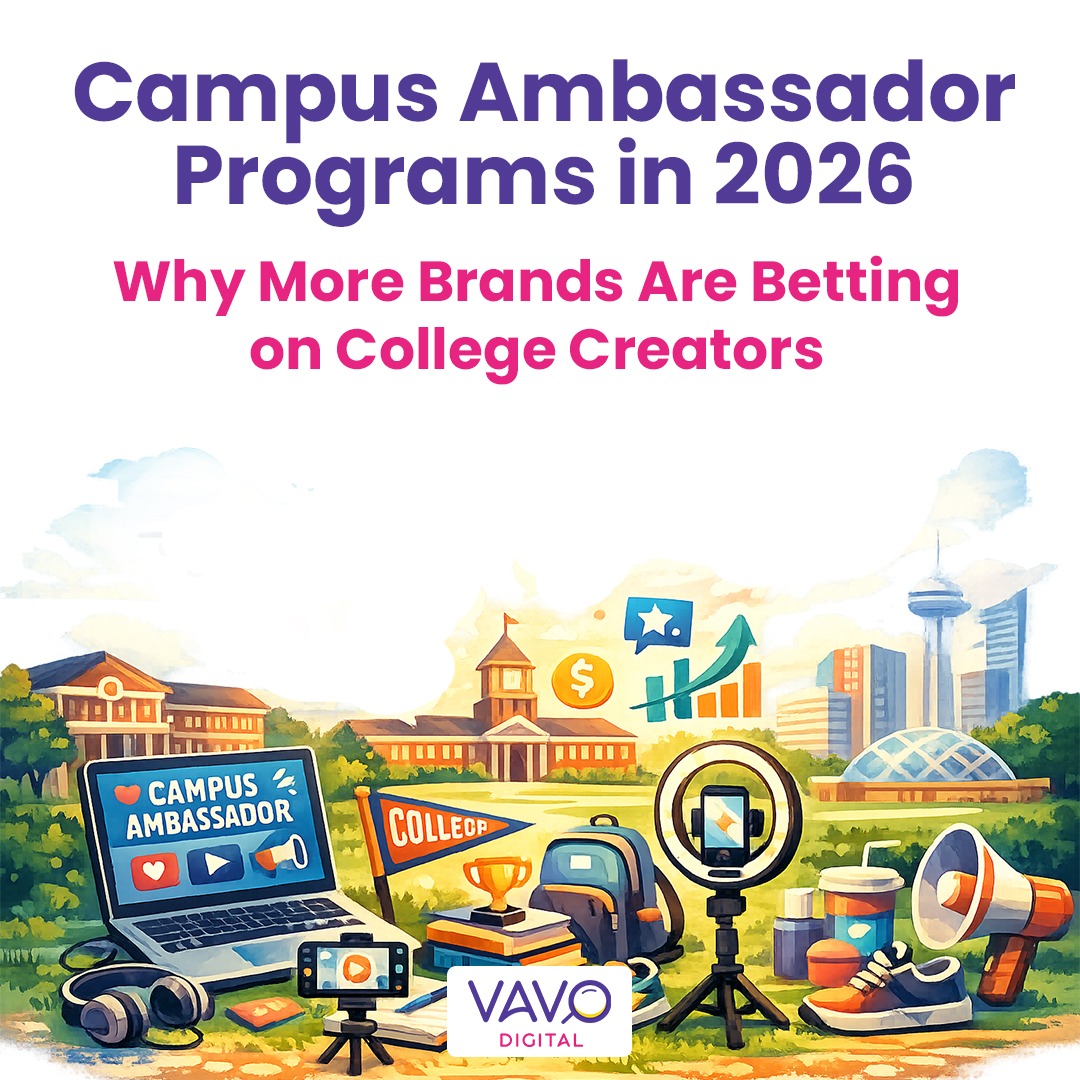
Campus Ambassador Programs in 2026: Why More Brands Are Betting on College Creators
Think about the last time an ad actually made you buy something in college. Chances are it wasn't an ad at all. It was a friend telling you about it between lectures, or someone in your hostel using a product you hadn't heard of. That's peer influence. And in 2026, the smartest brands in India are finally building a strategy around it.
Campus ambassador programs are having a serious moment, and it's not hard to see why.
Let’s decode together
Gen Z Buys Differently. Your Strategy Needs to Reflect That.
Gen Z isn't just a younger version of millennials. They're a fundamentally different kind of consumer, and brands that treat them the same way are leaving serious money on the table. Millennials grew up with the internet as a tool. Gen Z grew up with it as a world. Which means they've developed an almost instinctive ability to detect when something is trying to sell them something. They skip 82% of ads. They distrust polished brand content. They don't respond to discounts the way millennials do; they respond to values, authenticity, and most importantly, people they trust. Three-quarters of Gen Z rely on friends and peers when making purchase decisions. Not influencers they follow online. People in their actual lives, their hostel room, their college group chat, their lab partner who keeps recommending the same app. That's the insight campus ambassador programs are built on. Gen Z doesn't want to be marketed to. They want to hear about things from people who are living the same life they are. A student ambassador on their campus is exactly that person. What's Happening on Campuses Right Now Google launched its Gemini Student Ambassador Program in India this year, recruiting students across IITs, NITs, and regular colleges to lead AI workshops, organize events, and represent the brand within their campus communities. The program scaled massively in 2025 and is already bigger in 2026. That's Google. But the model works for brands of every size, fintech apps, D2C lifestyle brands, edtech platforms, and FMCG companies. Any brand that needs to reach the 18 to 24 age group is increasingly looking at campuses as a primary channel, not an afterthought. And the data backs it up. When a college student interacts with a brand ambassador on campus, 46% go on to research the product, 46% actually buy it, and 43% recommend it to a friend or family member. 90% take some form of action. That's not a vanity metric. That's conversion.Why It's a Win for Brands and Students Both
The best campus ambassador programs aren't one-sided. They're built on a genuine exchange — and that's exactly why they work. What brands get: Real peer-to-peer influence in a space no ad can reach. Authentic word-of-mouth that travels through group chats, canteen conversations, and college communities. Ground-level market intelligence on how Gen Z actually thinks about your category. And for brands targeting Tier 2 and Tier 3 India specifically, campus programs are one of the most cost-efficient ways to build a genuine presence in cities where traditional digital campaigns have very low penetration, but word-of-mouth travels incredibly fast. What students get: Real work experience that goes on a resume. Skill building in marketing, communication, and brand management. Early access to products, events, and networks. And in some cases, a direct pipeline into the brand itself for internships or full-time roles. When both sides are getting something real out of it, the ambassador shows up differently. They're not posting because they have to. They're representing a brand they've chosen to be part of. And that energy is something an audience can feel.Why Campus Ambassador Programs Work Alongside Your Influencer Strategy
Influencer campaigns are brilliant for scale, getting your brand in front of a large audience fast. But there's a layer of influence that even the best influencer campaign can't always reach: the everyday, in-person, real-life conversation. That's where campus ambassadors come in. They're not a replacement for influencer marketing. They're what make it complete. Think of it this way: a creator's reel builds awareness. A student ambassador in the same college cafeteria that same week turns that awareness into a real conversation. One amplifies the other. Brands that run both together see significantly stronger recall and conversion within the youth segment than those running either in isolation. The context a student ambassador brings, the library, the hostel group chat, and the college fest are simply different kinds of touchpoints. And in marketing, more relevant touchpoints always win. What a Campus Ambassador Program Actually Looks Like in 2026 A well-run campus ambassador program isn't just handing out free products and hoping students post about it. The brands doing this well in 2026 are running structured programs, ambassador recruitment and vetting, training on brand values and messaging, content creation guidelines, on-ground activations like events and pop-ups, and performance tracking across both online and offline touchpoints. The best programs also have a clear value exchange for the student, not just free stuff, but real experience, skill building, access, and, in some cases, early talent pipeline opportunities for the brand. For brands targeting India's Tier 2 and Tier 3 markets specifically, campus ambassador programs are one of the most cost-efficient ways to build genuine presence in cities where traditional digital campaigns have very low penetration, but word-of-mouth travels incredibly fast. Which Brands Should Be Running This Right Now If your brand is targeting any of the following, a campus ambassador program deserves serious budget consideration in 2026:- Edtech and upskilling platforms: Students are the obvious audience, and peer recommendations are the primary discovery channel in this category.
- Fintech and banking apps: The first banking or investing app a college student adopts often stays with them for years. Getting in early matters enormously.
- D2C lifestyle, beauty, and fashion brands: Campuses are trend-setting environments. What becomes popular in college hostels often spreads to the wider youth market within months.
- FMCG and food brands: sampling and ambassador interactions drive the highest purchase conversion in this category. Getting a product into someone's hands on campus is worth more than ten Instagram posts.
FAQs: Campus Brand Ambassador Program
- What is a Campus Brand Ambassador Program? It's a marketing initiative where students represent your brand within their campus, driving awareness, engagement, and authentic word-of-mouth promotion among their peers.
- What types of brands benefit from campus ambassador programs? From lifestyle, tech, and FMCG to education and fintech, any brand targeting Gen Z or college audiences can benefit. If your audience is between 18 and 24, this channel deserves a serious look.
- Can the program include offline activations? Absolutely. The best programs integrate offline touchpoints like campus events, contests, pop-ups, and workshops alongside digital content; that combination is what drives real recall.
- How is success measured? Through engagement rates, content reach, conversions, and campus-wise insights. A well-run program gives you both quantitative data and qualitative ground-level feedback you simply can't get from a digital campaign.